

 1-866-438-5442


 Heating & Cooling
 Water & Air Quality
 Home Security
 Commercial Solutions
 PROUDLY CANADIAN


Table of Contents

Quick Answer:
Choosing the right heat pump for an Ontario home starts with a professional CSA F280 heat loss and heat gain calculation. Select a cold-climate model suited to your heating needs, and compare efficiency ratings like SEER2 and HSPF2. Finally, verify compatibility with your existing HVAC system, check active rebate programs, and hire a qualified installer to handle the project.
Thinking of installing a heat pump in Toronto, Mississauga, or anywhere in Ontario? Whether you’re replacing an aging furnace, reducing energy costs, or improving year-round comfort, choosing the right heat pump is one of the most important HVAC investments you’ll make.
Compare Heat Pump Types
| System | Best For | Pros | Cons |
|---|---|---|---|
| Cold-climate ASHP | Most Ontario homes | Excellent winter efficiency | Higher upfront cost |
| Dual Fuel | Existing gas furnace | Lowest winter operating risk | Higher installation complexity |
| Ductless | Homes without ducts | Zoned comfort | Indoor wall units |
| Ground Source | Long-term efficiency | Lowest operating cost | Highest installation cost |
What is a Heat Pump (And Why Ontario Is Increasing Adoption)
A heat pump is a dual-purpose system that heats your home in winter and cools it in summer. Instead of generating heat by burning fuel or using electric resistance heating, a heat pump transfers heat using a refrigeration cycle.
In heating mode, it extracts heat from the outdoor air and transfers it indoors. In cooling mode, the process reverses, removing heat from inside your home and releasing it outdoors.
While a traditional gas furnace burns fuel to produce heat, a heat pump operates differently. Because heat pumps transfer heat rather than generate it, they can deliver several units of heat for every unit of electricity consumed under many operating conditions.
Their efficiency depends on outdoor temperatures, system design, and proper installation, making cold-climate models particularly well suited for Ontario’s winters. Beyond impressive energy efficiency, heat pump adoption across Ontario is surging thanks to the active Home Renovation Savings (HRS) program, broader provincial electrification initiatives, and growing homeowner demand to meet carbon-reduction goals.
What Many Homeowners Overlook When Buying a Heat Pump
Not automatically. Home updates (such as replacement windows, added insulation, or finished basements) can alter your home’s thermal envelope and cooling requirements. Relying on your old system’s tonnage risks installing an oversized unit that short-cycles or an undersized unit that struggles to maintain comfort.
A current CSA F280 calculation helps determine your home’s cooling requirements so the replacement system can be appropriately sized before purchase.
Get the Right Size Heat Pump for Your Home
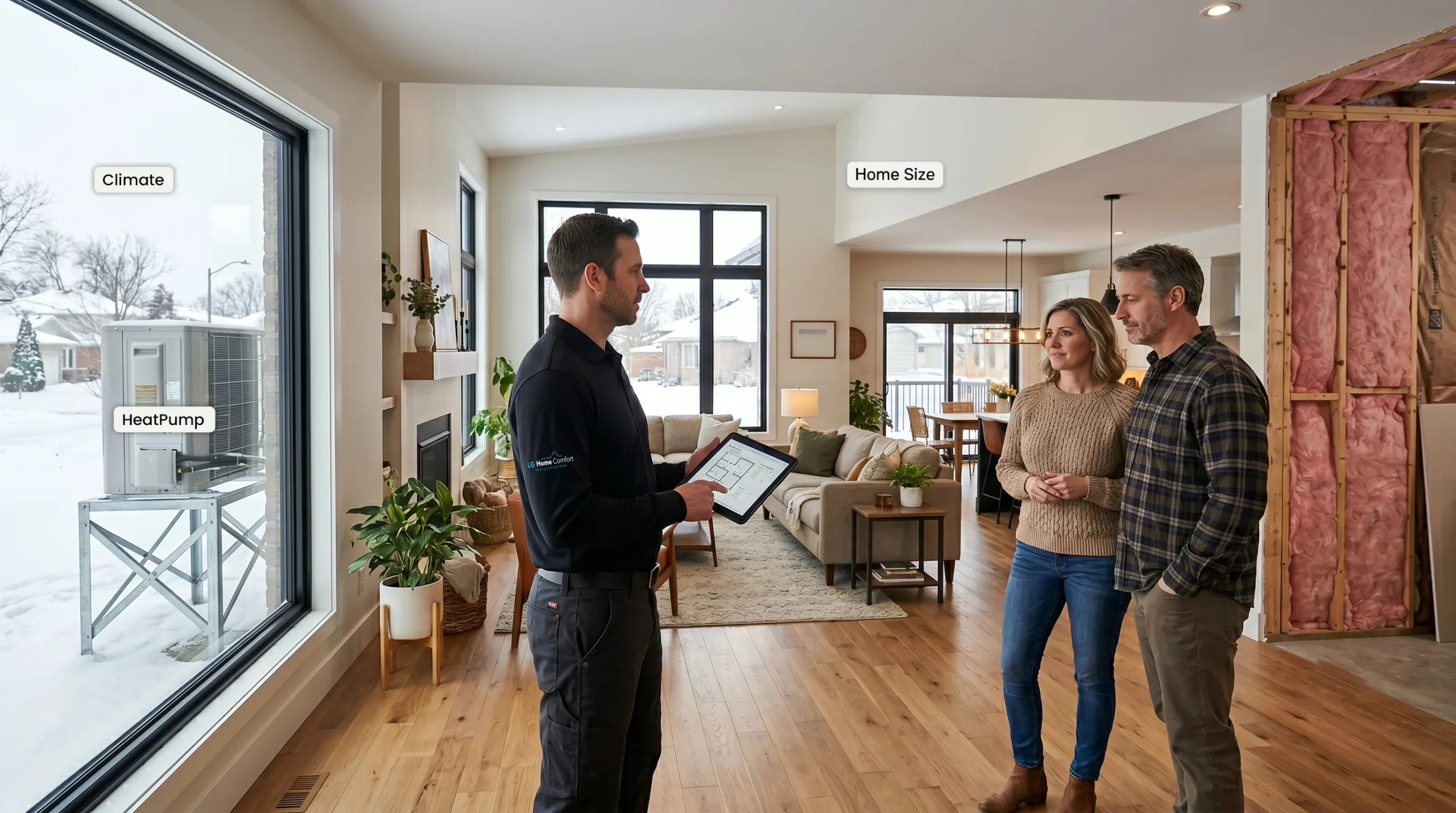 Proper sizing isn’t something to estimate. Right-sizing means comfort, efficiency, and durability. Oversized systems may short cycle, reducing humidity control, comfort, and efficiency.
Ask your LG Home Comfort Technician for a CSA F280 load calculation (the Canadian standard required by the Ontario Building Code, while the U.S. equivalent is Manual J).
Properly sizing your heat pump prevents system short cycling, ensuring optimal efficiency, lower energy bills, and consistent indoor comfort. It factors in:
- Your home’s total square footage and layout
- Insulation quality in walls, attic, and basement
- Window and door sizing, room orientation, and overall glass efficiency
- Sun exposure and shading
- Local climate data and design temperatures
- Indoor heat sources (appliances, electronics, occupants)
- Existing ductwork design, airflow capacity, and static pressure (essential for ducted heat pump performance)
Quick sizing reference (rough ranges only; confirm with a CSA F280 calculation):
| What Affects Heat Pump Size? | Why It Matters |
|---|---|
| Home insulation | Reduces heating and cooling demand |
| Window size & orientation | Influences solar heat gain and heat loss |
| Air leakage | Affects heating and cooling loads |
| Ceiling height | Changes conditioned air volume |
| Local Ontario climate | Determines winter design temperatures |
| Occupancy & internal heat gains | Influences cooling requirements |
Prioritize Efficiency: SEER2 & HSPF2 Matter. Higher efficiency means lower bills and better rebate eligibility:
- SEER2 (cooling): Target 15 or higher.
- HSPF2 (heating): Aim for 8.5 or higher (cold-climate models often go higher).
These SEER2 and HSPF2 ratings have been the standard in Canada since 2023, replacing older testing methods to better reflect real-world operating conditions. This is especially important because most Canadian utility and government rebate programs require ENERGY STAR® certified equipment to qualify.
Understanding Heat Pump Pricing, Savings, and Rebates in Ontario
Installation costs vary based on system size, electrical requirements, ductwork, and installation complexity. Eligible homeowners may qualify for provincial and utility rebates that can offset a meaningful portion of the total cost. An LG Home Comfort Advisor can provide a personalized quote, confirm rebate eligibility, and estimate your potential savings.
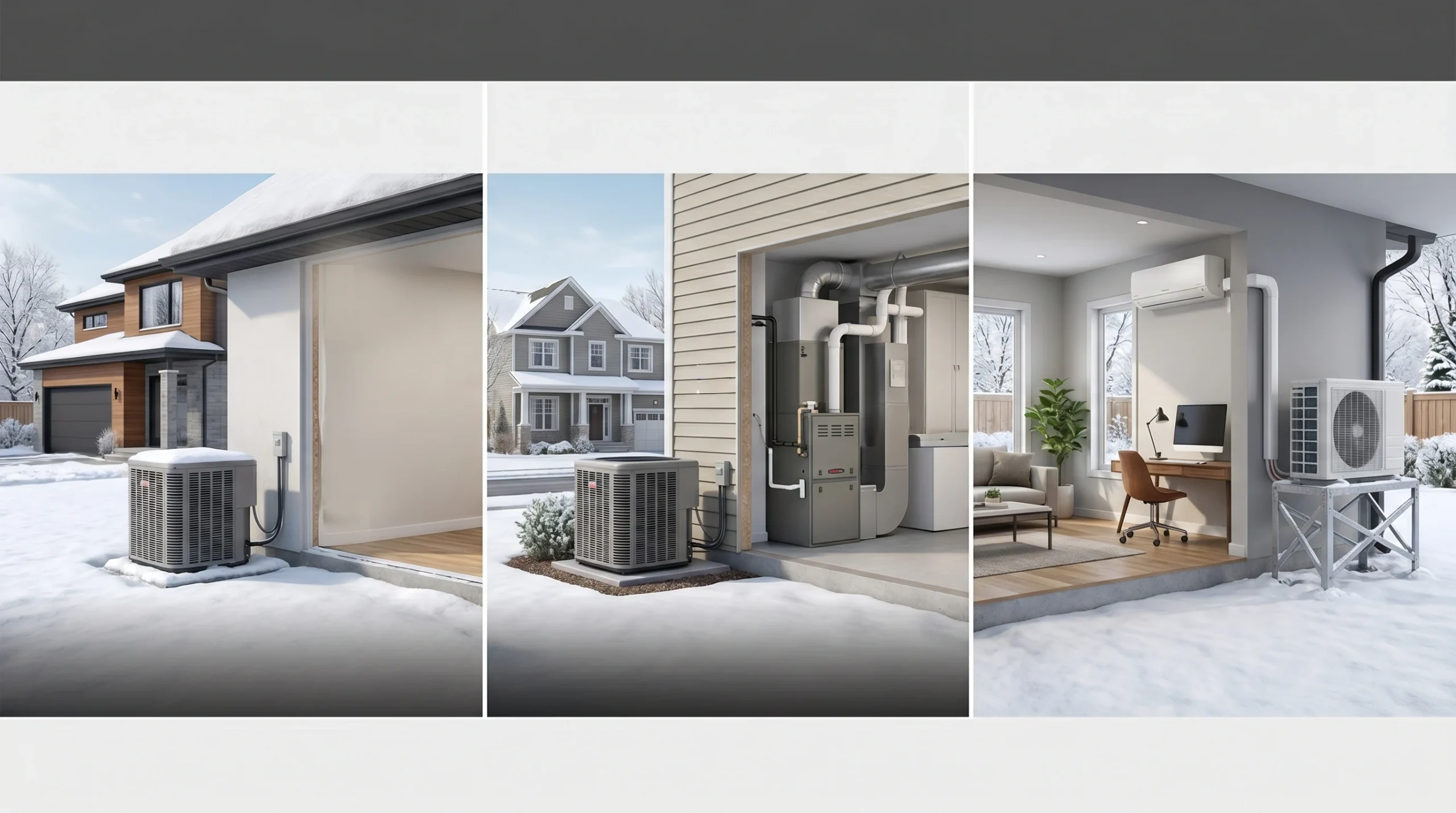
- Cold-climate air-source heat pumps: Built for sub-zero temperatures. Look for ENERGY STAR Most Efficient models with inverter compressors.
- Dual-fuel systems: Ideal for homes with an existing gas line. Your cold-climate heat pump efficiently handles winter conditions deep into sub-zero temperatures, while the gas furnace automatically takes over as backup during extreme cold snaps.
- Ductless mini-splits: Great for homes without ductwork, retrofits, or basement apartments. Offers minimal home disruption during installation, zoned comfort, and eligibility for available rebates.
Why Noise Ratings Matter
Outdoor heat pumps typically operate between 50 and 60 dB, like a normal conversation.
Most modern variable-speed outdoor heat pumps operate between 45 and 60 dB depending on operating capacity and unit size. If low noise is a priority for your patio or bedroom location, look for models with sound ratings around 50 and 58 dB or features like Quiet Mode.
This matters most in semi-detached and closely spaced homes, where the outdoor unit sits near a neighbour’s window.
Why Professional Heat Pump Installation Matters?
Even the best heat pump fails if it’s poorly installed. Ask before you sign:
- Are you TSSA certified for any gas work, and do you use licensed electricians for the electrical side?
- Do you perform a CSA F280 load calculation?
- Can I get the heat pump cost estimate in writing?
- Do you offer rebate application assistance?
- Do you service my city and nearby suburbs?
An LG Home Comfort Advisor will walk you through every one of these requirements while helping you claim the highest possible rebate.
Warranties & Advanced Features
Most major manufacturers offer a 10-year parts warranty when registration requirements are met, though coverage varies by brand.
- Variable-speed compressors (efficiency)
- Smart-thermostat compatibility
- Cold-Climate Heat Pump (CCHP) Design
- Optional backup heat source (electric strips or dual-fuel setup) for extreme winter temperatures.
Choose a Reputable Heat Pump Brand
- Check independent reliability ratings (e.g., Consumer Reports).
- Ask HVAC pros what they actually install and stand behind.
- Read local Google reviews for installers in your area.
- Confirm that replacement parts and warranty service are readily available in Ontario.
Understand Rebates & Incentives (2026)
Here are the main Ontario programs as of 2026
| Program | Amount | Applies to |
|---|---|---|
| Home Renovation Savings (HRS): Air-Source | Varies by heating type and system (ask your LG Home Comfort Advisor for current amounts) | Cold-climate air-source heat pump |
| HRS (Ground-Source) | Up to $12,000 (non-gas homes) / $3,000 flat rate (gas homes) | Geothermal heat pump |
| Canada Greener Homes Grant / Loan | Closed | Grant closed Feb 2024; Loan closed Oct 1, 2025 |
| Enbridge HER+ | Closed | Closed to new applicants Feb 5, 2024 |
| Local utility / Save on Energy | Varies | Delivered alongside HRS |
The Ultimate Buying Checklist (Ontario Edition)
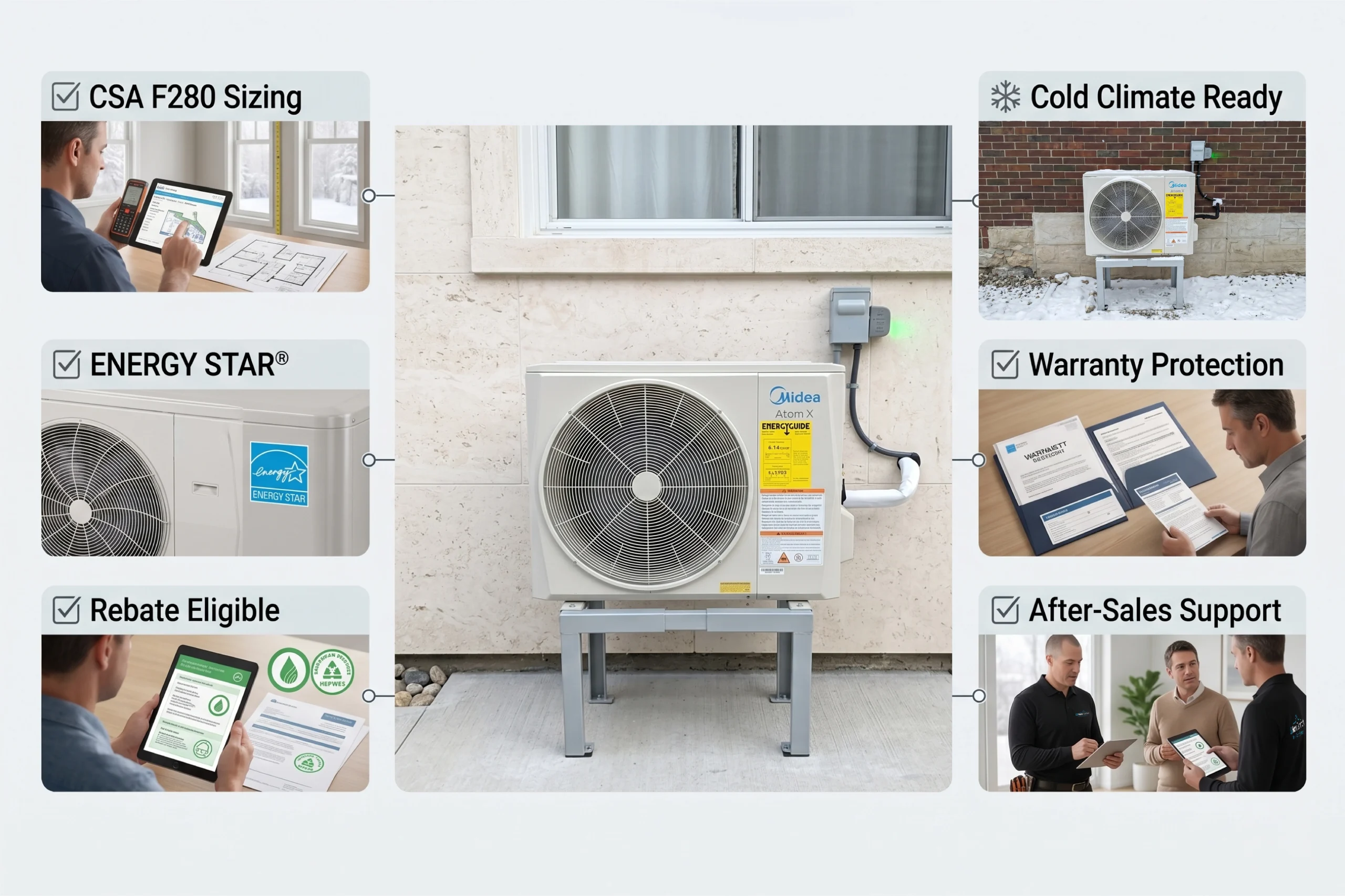
- Is this model ENERGY STAR Most Efficient (current year)?
- Does it qualify for current provincial and utility rebates?
- Is it rated for cold-climate operation?
- Do I have a dual-fuel or backup-heat plan?
- Am I working with a company that offers service and support?
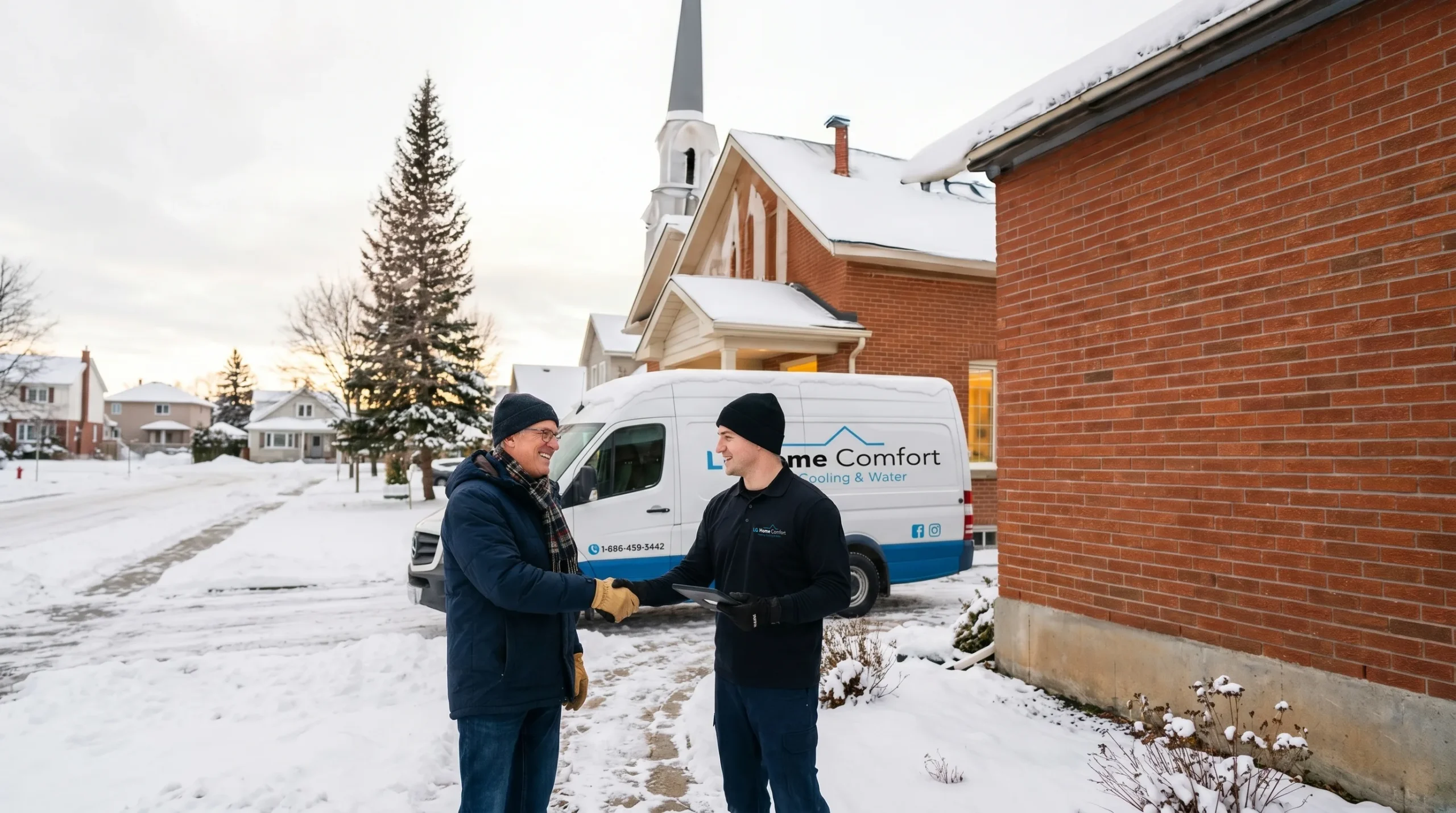
Contact LG Home Comfort for a personalized quote, to check rebate eligibility, or to help choose between ductless and dual-fuel or call 1-866-438-5442.
Final Thoughts
Whether you’re replacing a furnace, adding cooling, or planning a greener home, a properly sized and installed heat pump improves comfort, indoor air quality, and energy efficiency while lowering operating costs. The key is choosing the right type and size for your home and having it installed by a licensed Ontario contractor.
FAQs
01 What is the average cost of a heat pump in Toronto?
The average cost of installing a heat pump in Toronto ranges from $6,500 to $14,000, depending on size, efficiency rating and system type. Cold-climate and dual-fuel systems can cost more but may qualify for Ontario rebates.
02 Do heat pumps work in cold Ontario winters?
Cold-climate heat pumps are engineered for extreme winter conditions, with select models capable of operating in temperatures as low as -25°C to -30°C depending on the manufacturer and specific system specifications.
03 Do heat pumps work during a power outage?
No. Like furnaces with electronic controls and central air conditioners, heat pumps require electricity to operate. During a power outage, they will not provide heating or cooling unless your home has a backup power source such as a standby generator.
04 Which heat pump system is best for my home: central or ductless mini-split?
It depends on your home’s existing installation and heating needs. A central heat pump replaces or works alongside a gas furnace to handle heating and cooling through existing ductwork, while a ductless mini-split is ideal for homes without ducts or for targeted room-by-room heating in condos, additions, and basement apartments. Both systems deliver substantial energy savings, but keeping a gas furnace in a dual-fuel setup offers reliable backup on the coldest Ontario winter days.
05 What size heat pump do I need for my Ontario home?
Most Ontario homes need roughly 1.5 to 3.5 tons, depending on square footage, insulation, and local climate. Always have a certified HVAC technician perform a proper CSA F280 load calculation to ensure accurate sizing rather than relying on square footage alone.
06 Will my electrical panel need an upgrade before installing a heat pump?
It depends on your current panel capacity and system type. If your home has a 100-amp electrical panel and you are installing an all-electric central heat pump with auxiliary heat strips, you may need a panel upgrade to 200 amps. However, if you are opting for a hybrid (dual-fuel) system paired with your gas furnace, your existing electrical setup is often sufficient.
Need Help Choosing the Right Heat Pump? Request a personalized quote with LG Home Comfort to check sizing, rebates, and system compatibility for your Ontario home.

Don't miss our latest guides and updates.
Add LG Home Comfort as a Preferred Source on Google.


Table of Contents
Show More

Related Articles

Search Articles