

 1-866-438-5442


 Heating & Cooling
 Water & Air Quality
 Home Security
 Commercial Solutions
 PROUDLY CANADIAN

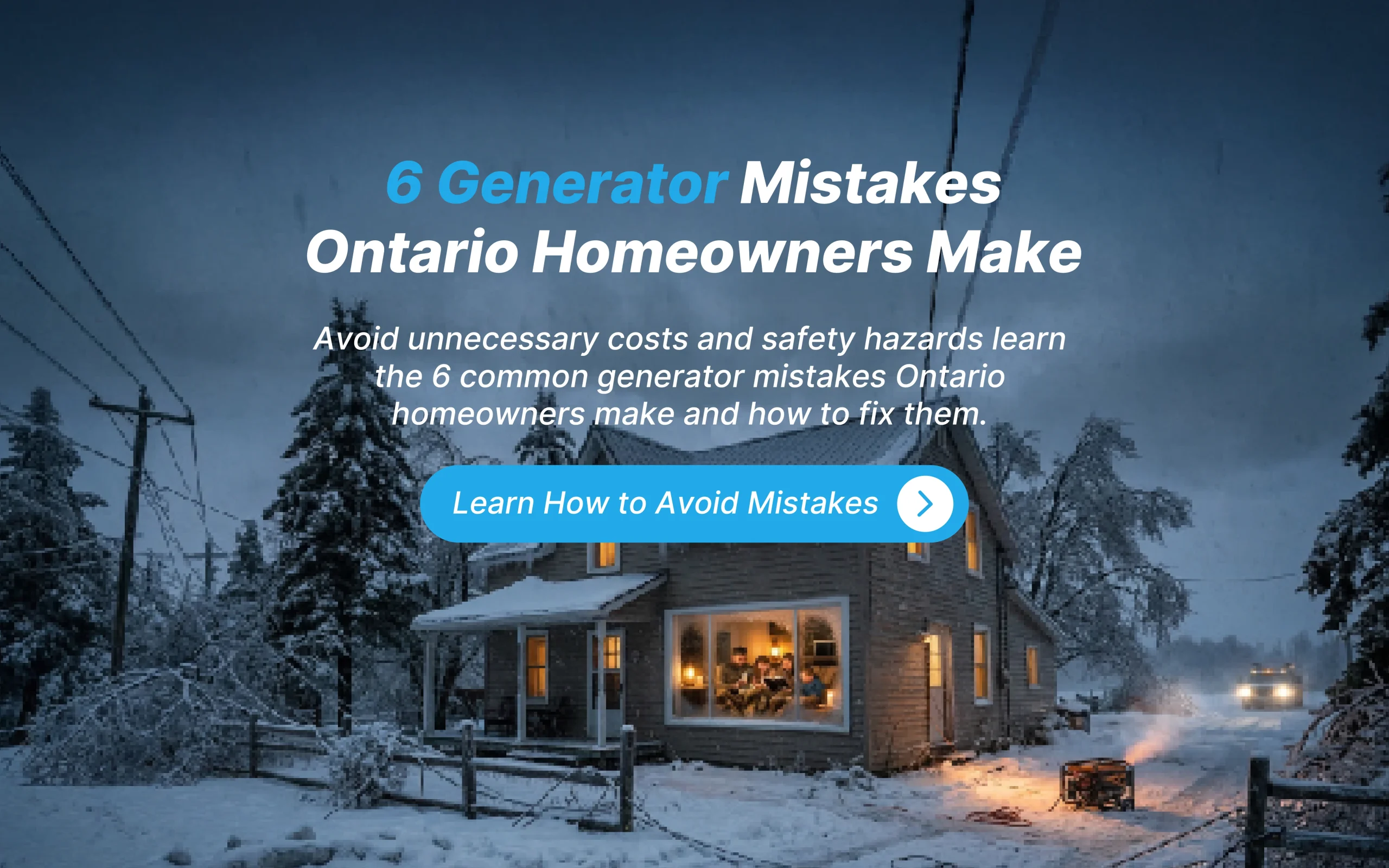

Table of Contents

Ontario’s weather is becoming unpredictable, from frigid ice storms and heavy snowfall to sudden intense summer windstorms. These conditions put unnecessary strain on the regional electricity grid with momentary blips lasting only a few seconds.
In remote and suburban areas, outages last longer and pose significant challenges. Major extreme weather events account for more than half the notable power cuts in Ontario and often take days to restore in rural spots. A reliable backup generator means no worries about frozen pipes or spoiled food during long winter blackouts.
Just having a backup system is not enough. Without proper setup, you can’t ensure safety and reliability. LG Home Comfort has been Ontario’s choice, helping families stay warm with professional generators and HVAC solutions designed for our unique climate.
Quick Summary: The Most Common Generator Mistakes We See in Ontario Homes
- Incorrect Placement: Running generators in garages or near windows and doors risks carbon monoxide poisoning.
- Risky/Lethal Backfeeding: Plugging into outlets without a transfer switch is illegal and endangers the utility workers.
- Faulty Sizing: Undersized units’ overload, whereas oversized units result in fuel wastage.
- Ignoring Maintenance: Skipping oil changes means it won’t start when needed.
- Unsafe Fuel Handling: Stocking huge volumes of gasoline in the house or fueling an engine results in a fire hazard.
- Overlooking Winterproofing: No cold-weather kits or snow clearance leads to complete system failure.
Incorrect Placement or Running Generators Too Close to the Home
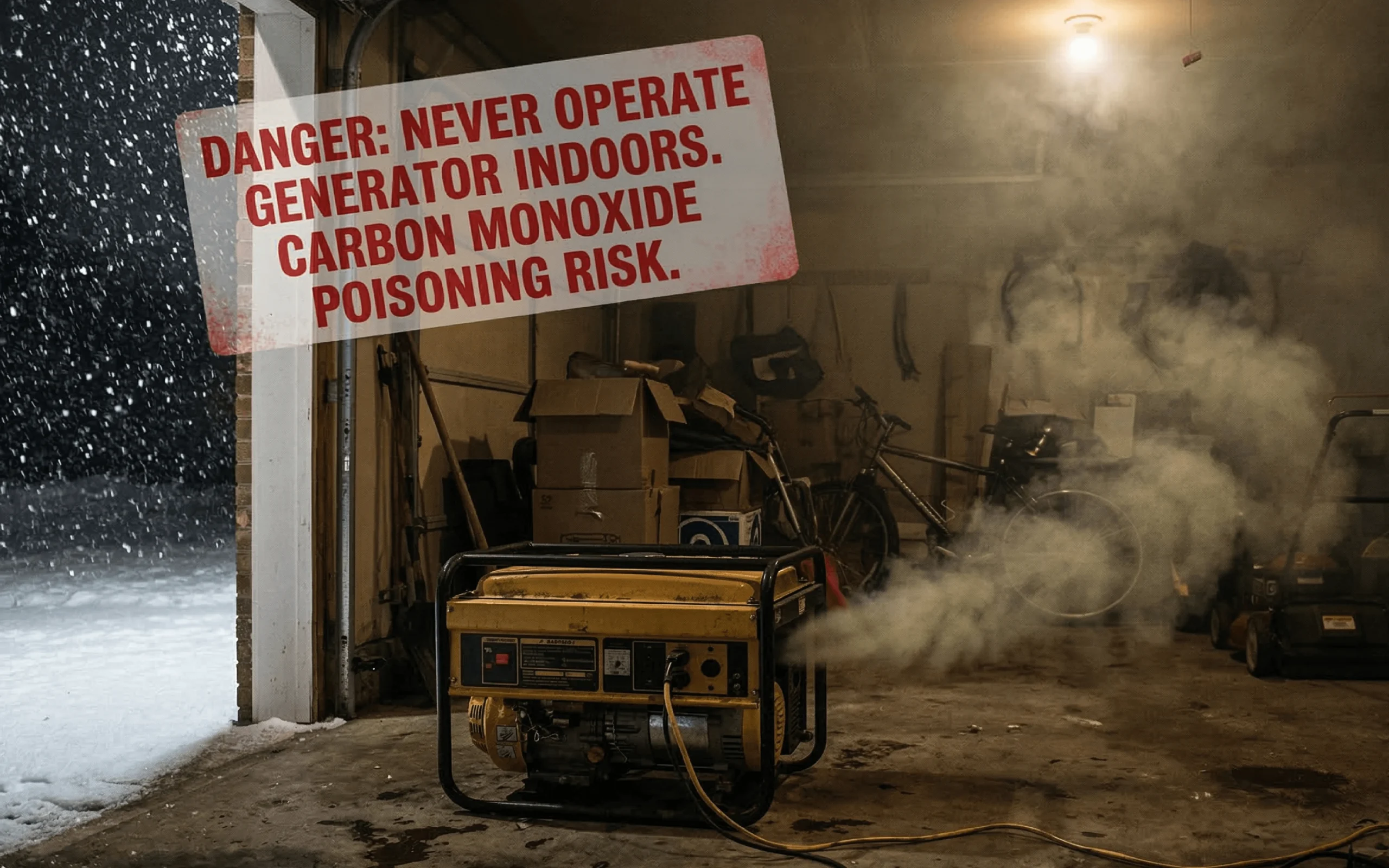
The highly life-threatening mistake any homeowner in Ontario can make is the incorrect placement of generators. A portable generator emits Carbon Monoxide (CO), which is odourless and colourless, within minutes.
So, placing a unit near windows, doors, or vents lets fumes enter your home, turning a deadly blackout emergency.
In Ontario snowstorms, placing a generator in a shed or a garage to protect it might sound right, but it traps exhaust and blocks the unit’s air vents, pushing exhaust fumes back toward the home’s foundation.
To avoid such a risk, LG Home Comfort understands the importance of safe outdoor replacement, making sure that all backup generators are installed with correct clearances for your home safety.
Along with it, get battery-powered CO detectors on each floor of their house to get an alert if air quality declines.
Backfeeding - A Dangerous and Illegal Practice
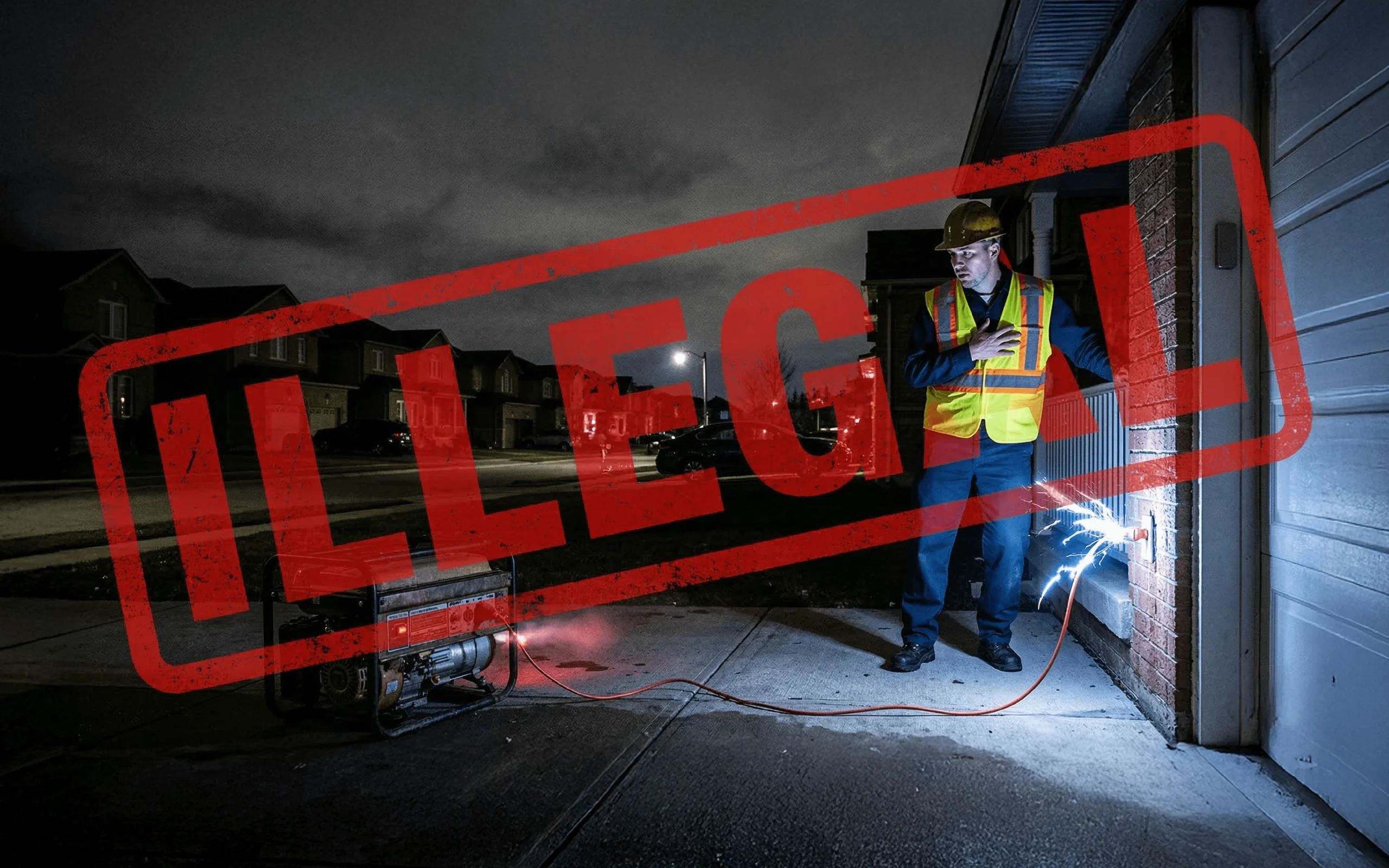
Backfeeding is when a homeowner tries to power up their home by plugging in a portable generator to a standard wall plug with the help of a cable that has two male ends.
To most, it is an instant fix for powering the home, as it pushes electricity to the electrical board and power lines, resulting in a quiet and life-threatening danger for everyone on the grid.
- Life risk to utility workers: Power which is sent back to the grid lines is picked up by the transformers, electrocuting the electricity crew workers to restore electricity in your neighborhood.
- Fire Safety Risk: Backfeeding sidesteps the home’s prime circuit breakers; if the city’s power is suddenly restored while your generator is still connected, it will cause a surge, which would further result in an electrical fire and ruin your generator.
- Ontario Electrical Safety Standards: It is illegal in Ontario to connect a generator to a home wiring in the absence of a visible break from the utility grid; it should have an automatic or manual transfer switch.
- ESA Compliant Installation: Every generator interconnection is mandatory to be checked and verified by ESA to make sure it meets the safety standards and does not nullify your home insurance.
- The LG Home Comfort Solution: Our TSSA-accredited electricians use the Best quality automatic transfer switches that act as a wall between backfeeding, making sure your house is not only powered while there is no risk posed to the lives of utility workers.
Choosing the Wrong Generator Size for Your Ontario Home or Faulty Sizing
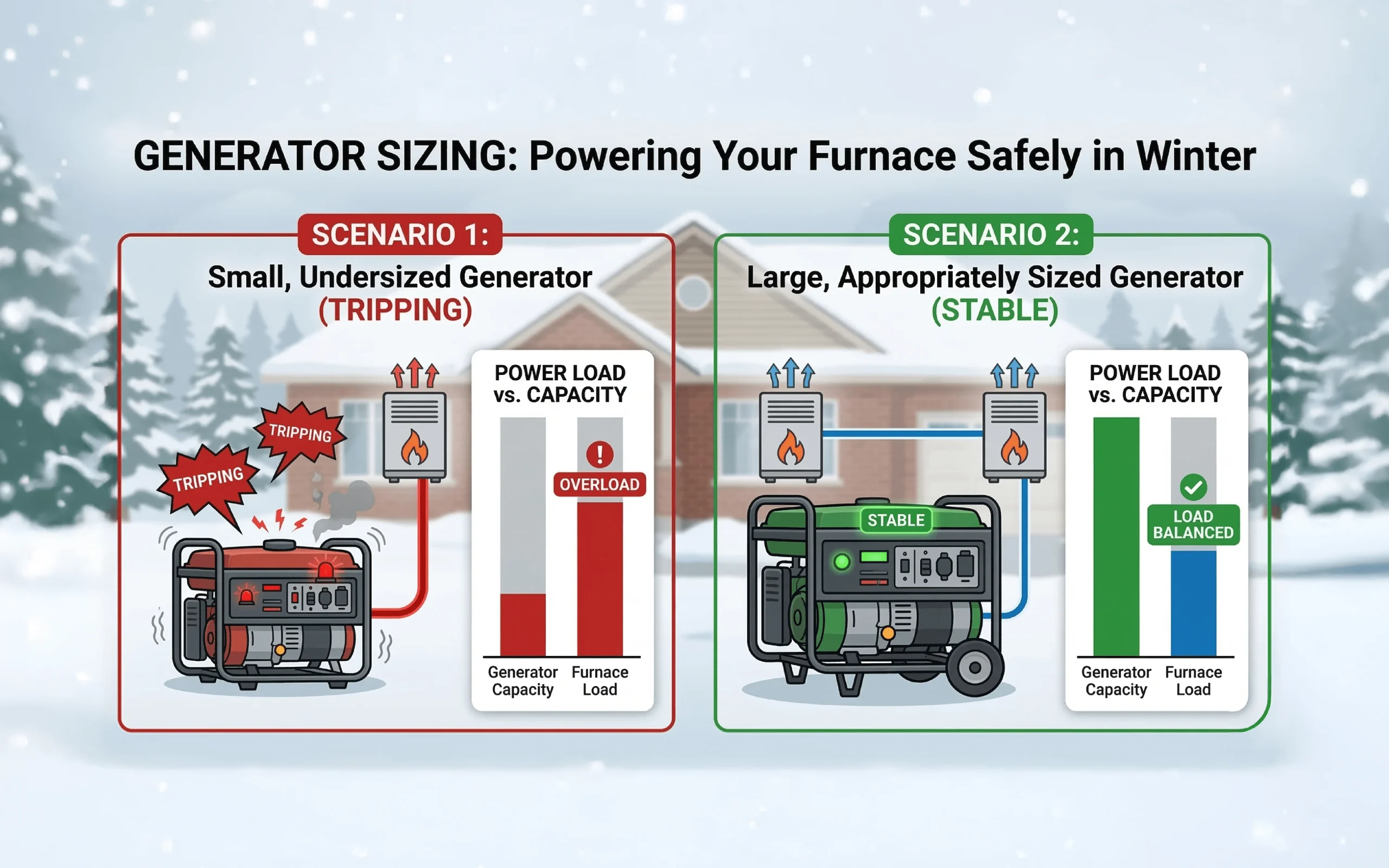
- Trouble with the undersized units: Most homeowners in Ontario buy a generator based on its peak wattage, just to end up with a situation where the generator keeps tripping the breakers whenever the furnace tries to start. A small unit is unable to handle the startup surge needed by power-hungry motors, leading to brownouts that ruin the sensitive circuit board in the high-end appliances forever.
- Hidden Cost of Oversizing: On the other hand, bigger is not always better for someone with a compact budget. An oversized generator uses additional fuel - be it gas or propane - to generate a similar amount of power. Power cut for multiple days, while you run low on fuel due to a shortage or roads blocked due to snow, can become a big burden.
- Key Circuit Backup vs Whole-Home Backup: Choosing one totally depends on your lifestyle and budget. If you only need the basics of the house, like lights and fridge running, then “Essential Circuit” is your choice. On the other hand, if you need all appliances for the family so that they can cook, bathe, and wash, then Whole-Home Backup is what you need.
- Professional power evaluation: We at LG Home Comfort skip guesswork completely by carrying out an electrical load evaluation. We inspect your home’s particular power consumption to make sure your backup power is stable and should be able to handle peak demand, but is so streamlined that it lets homeowners save money on fuel.
Skipping Maintenance Until It Is Too Late
Do not wait for a blackout to find out your backup generator is failing. Neglecting routine care is the leading cause of generator failure when you need it most. It can be one of the biggest mistakes a homeowner makes to wait until their backup power fails.
- Oil Changes: This is like changing your vehicle’s engine oil. A car/bike needs fresh oil to avoid internal friction and overheating while running continuously.
- Battery Health: What’s the biggest reason generators fail? A dead battery, that is what! Timely voltage checks make sure you are never uncertain about the emergencies ahead.
- Monthly Exercise: Generators need to run at regular intervals, which does the job of circulating the fluids as well as diagnosing to check if there is any problem with the functioning. And just in case you started it 2 months ago, the chances of it starting now are incredibly low.
- Preparing for cold weather: Checking heater blocks as well as fuel lines for freezing, preparing for winter is the difference between staying warm and comfortable, or dealing with frozen, broken plumbing.
- Take care of your investment: Reacting to a crisis is usually useless; however, preparing ahead? That is a bright idea. LG Home Comfort’s Maintenance Service Plans offer timely professional inspections, checking fluids, inspecting for a top-off, and checking the system inside and out so that you are mentally at peace with the setup, irrespective of the weather.
Unsafe Fuel Storage and Refueling
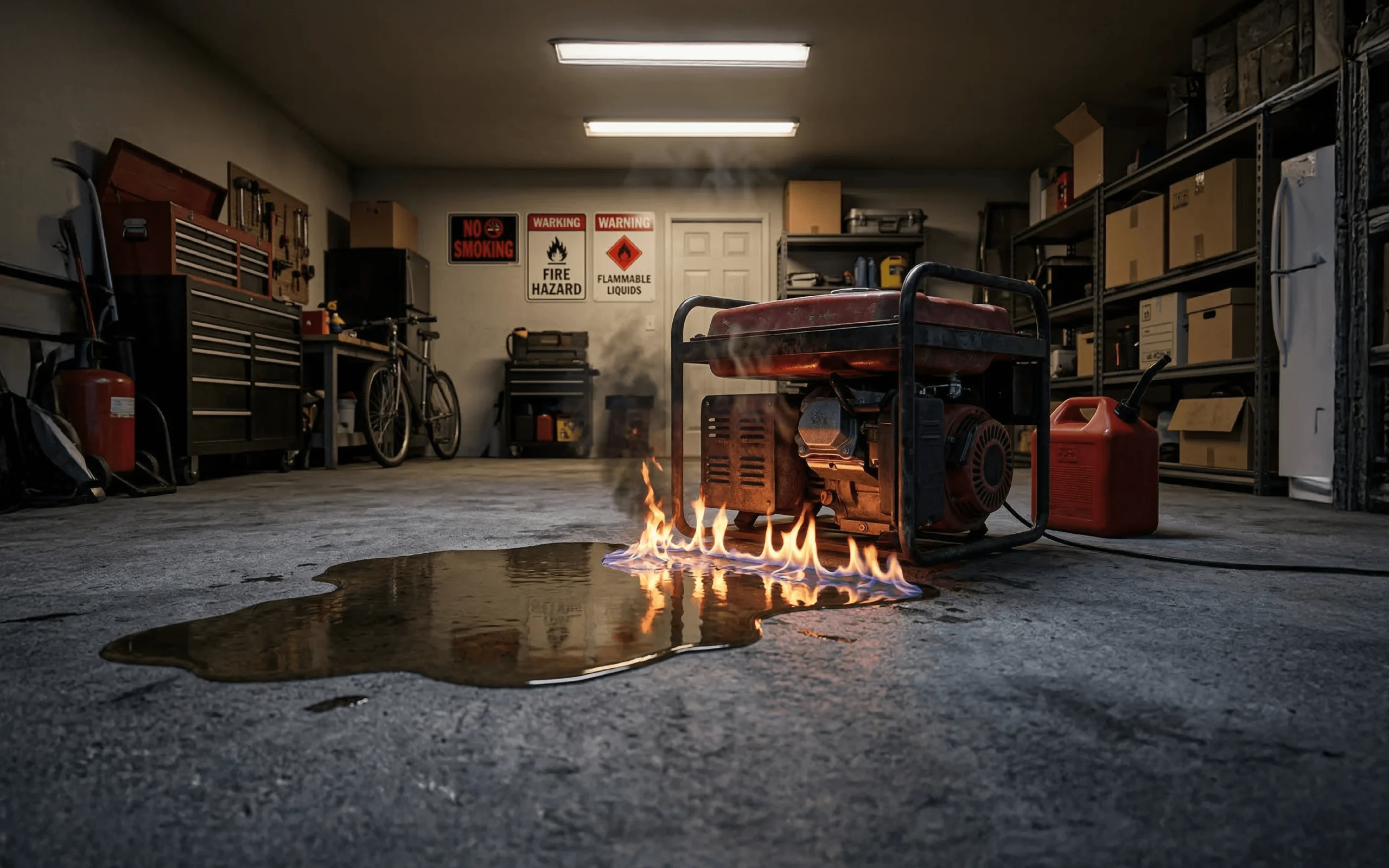
Having electricity in your home does not mean you should gamble with your safety just to keep the lights on.
- Fire hazards: Gasoline is volatile and changes to a gas (gaseous state) very quickly. It is a highly flammable vapor which could result in a fire accident almost immediately if it encounters a spark from a water heater or any other appliance/source.
- Keeping Gasoline inside the home: To keep gasoline at home, a storage room or a garage is very risky. Even the smallest of leaks can fill your home with harmful vapour and emissions, which could create a massive fire risk.
- Refuelling while hot: Refuelling gas in a generator which is running and still hot or has just been shut off makes disaster inevitable.
Why do standby generators reduce risk?
As the standby generators are connected directly to the main fuel line of the house, it means you never need to be bothered about gas spilling, moving heavy cans, or having to refuel in the dark.
Just like a standby unit, your inverter generator requires regular oil changes and spark plug checks to ensure it starts on the first pull during a storm.
Ontario Winters Require Special Generator Preparation
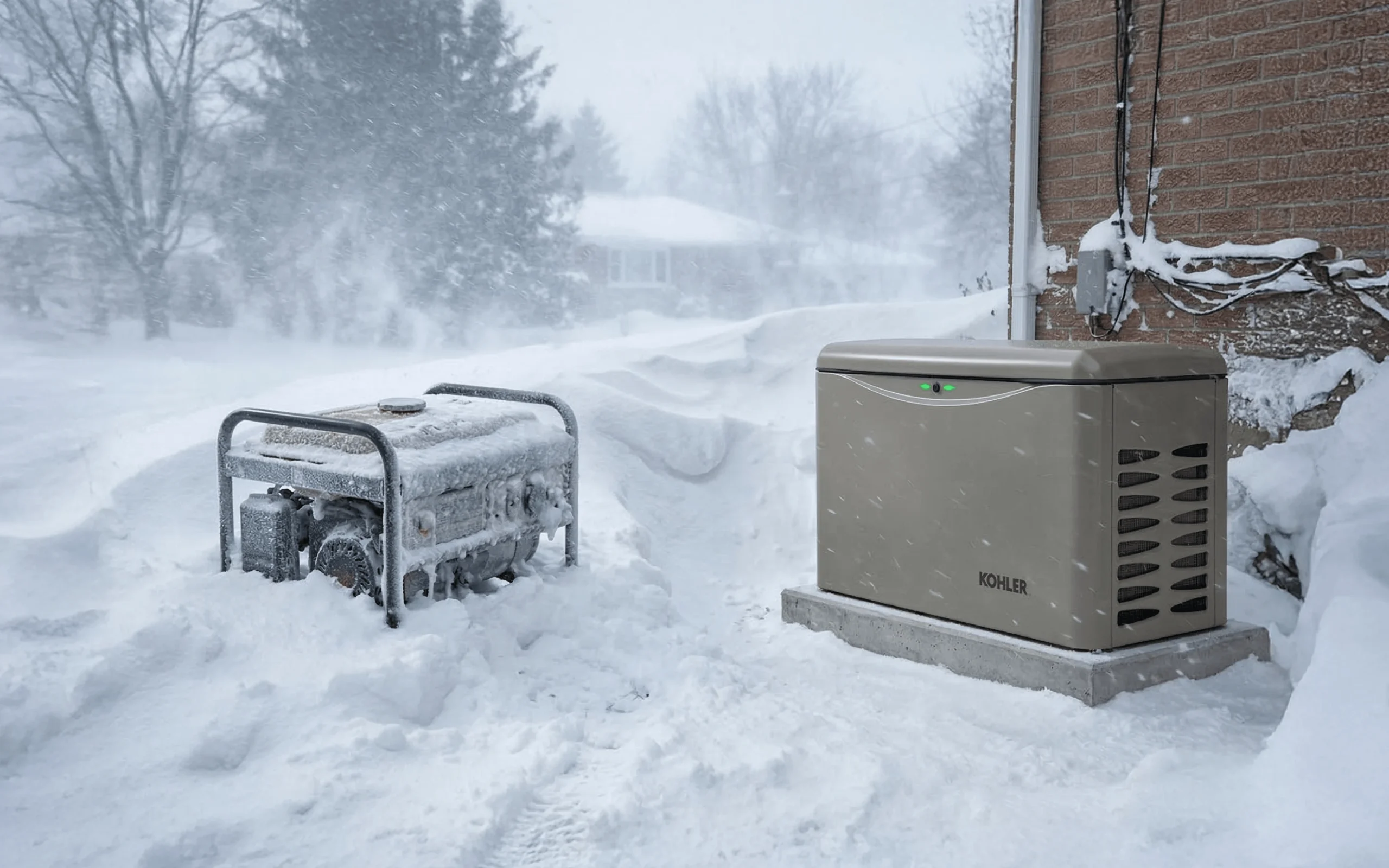
Ontario’s winters are more than just snow; it brings weather conditions that test your home systems’ resilience. When ice weighs down your unit’s vents - which is the main reason for Hydro One’s extended power cuts - the power grid could stay out for days. If you reside in a remote area or on the city’s outer limits, you understand that living the furthest simply means your power would probably be restored last.
Standby generators work seamlessly in such bad weather conditions. So, if there is a power failure, bad weather, or heavy snowfall, you don’t need to step out of the house; the standby generator will automatically detect it and restore the power within seconds. Hence, even if you are sleeping or are away from home for work or any other reason, the standby generator keeps the essential appliances active.
To get through this situation, you don’t just need a generator, but one that is well-prepped for such unpredictable weather situations.
- Cold-start failures: When the temperature gets extremely cold, an engine struggles to start as the oil inside becomes thick and cannot move.
- Battery warmers: Might seem small in comparison to the generator itself; a small heater is what keeps your battery alive even when the temperature is subzero.
- Snow and ice buildup: This is something most are not prepared for. When it starts snowing, the snow clogs the vents, and sometimes even freezes the parts. This either causes the generator to malfunction or, worse, it will not start at all.
Portable/Inverter vs Standby Generators - Which Is Right for Your Ontario Property?
A power outage cannot be taken lightly in Ontario; it carries a significant risk to your home infrastructure. Be it a summer “supercell” or a winter ice storm, deciding which is the correct power generator is the only way to ensure your pipes do not freeze, nor your basement floods when there is a power outage.
While standby units are permanent, an inverter generator is a portable, high-tech option that is much quieter and safer for charging sensitive electronics like laptops and phones.
| Feature | Portable Generators | Standby Generators |
|---|---|---|
| Starting Logic | You need to be home to do it. | Detects power cut and starts automatically |
| Fuel Source | Requires manual refiling (Gas/Propane) | Directly fed (Propane/Natural Gas) |
| Installation | Manual Transfer Switch | Permanent installation on a concrete pad. |
| Power Capacity | Powers few wired appliances | Whole Home (Kitchen, Pump, etc.) |
| Weather Risk | Cannot withstand storms | It can withstand all types of weather. |
| Maintenance | High maintenance. | Minimal maintenance. |
The primary benefit of an inverter generator is its feature of making the electricity clean before it’s supplied to your home’s power outlet, avoiding power surges which damages smart appliances.
What are the compromises on both generators? (Standby Generators and Portable Generators)
(i) Standby Generators: “The Buy it once, and don’t look back” solution.
Ideal for: Remote workers, families, anybody who needs complete mental peace irrespective of the weather.
A standby generator is a more permanent home solution. It keeps an eye on the electricity supply of the house, and when it fails, the generator starts automatically, irrespective of whether you are at work or at home sleeping. For properties in Ontario that have sump pumps or high heating requirements, this is something that helps in avoiding disastrous pipe bursts and water damage.
(ii) Portable Generators: The Affordable Bridge
Ideal for: Short (duration) power outages, and people who are well-versed in small engine service maintenance.
Perfect for people who run on a compact budget, good for those with minimal or less usage of electricity-powered appliances. Although in Ontario’s bitter winters, having to drag it out of the garage, fuel it, and attach connection cords, you do all of this while it is freezing and snowing at the same time.
Cost of Generator Mistakes vs. Professional Installation in Ontario
Saving money in Ontario with a DIY generator idea usually gets people into a debt trap of fines, repairs, and even safety hazards. Below are mentioned the unexpected costs you pay for making a mistake versus what value a professional install offer.
The actual price of DIY Errors
At first, a DIY approach may sound very practical and inexpensive, but the slightest errors lead to huge fines. In Ontario, professional installation is the only way to ensure your backup unit is legally compliant and safe for your family.
- ESA Violations: It is against the law in Ontario to use your generator in the absence of a permit. The Electrical Safety Authority imposes fines, and if the violations are serious, it may lead to court and attract fines of up to $50000.
- Denied by Insurance: All major insurers in Ontario need an Acceptance Certificate from ESA. If a generator catches fire with the generator installed, your claim is going to be refused, which leaves you with $10000-$110000 in out-of-pocket losses.
- Damages to Infrastructure: Wrong wiring isn’t just risky for the utility workers working on LIVE wires, but it can also set 4 houses on fire easily, plus the expensive electronics that run on electricity can have their boards fried with the extra power surge, which gradually brings these costs to $1000-$5000 for just the spare part replacements.
- Health Risk: In case of inappropriate venting, it can cause CO buildup.
LG Home Comfort: The Professional Advantage
You surely are not one of those who would save a dollar and drop a 100-dollar bill, right? Because while doing so, any error would simply cost you around $10K. A professional installation, on the other hand, in Ontario pays for itself with efficiency and complete safety.
LG Home Comfort helps you choose a power outage generator that can handle your furnace, fridge, and lights all at the same time.
| Feature | Risk Involved in DIY | Benefit you get from LGHC |
|---|---|---|
| Law | $5000, plus ESA fines. | Includes certified permits & inspections. |
| Insurance | Uncertified work leads to claim denial. | Complete coverage with professional certification. |
| Warranty | Wastage of fuel due to incorrect sizing. | 30%-50% saved annually on fuel and maintenance. |
Pro-Tip: When it comes to efficiency, unlike traditional motors that run at full speed constantly, an inverter generator adjusts its engine to only use the fuel it needs, helping your gas tank last much longer during a multi-day outage.
Generator Safety Checklist for Ontario Homeowners
Why wait for the storm to hit? Here is the checklist that makes sure your backup generator is ready to use.
Before the Next Storm:
- Ensuring Transfer Switch: Make sure a professional switch is installed. This helps in avoiding backfeeding which is lethal to utility technicians.
- Carbon Monoxide Safety: All the floors of your home should have battery-run CO detectors. Always avoid placing a portable unit in a garage or near a window.
- Monthly Test Run: When the unit is unused, ensure that it is powered once a month for 20 minutes so that the oil gets circulated in the machine and keeps the battery charged.
- Clear the Perimeter: It is important to have at least 3 feet of clearance for outdoor units, as in the winter season, during a heavy snowfall, a lot of snow is accumulated, so it needs to be cleared to keep the exhaust vents unclogged.
- Fuel Inventory: For a portable generator (unit), you must replace your old gas with new/fresh gas two times a year. And if you have a standby generator, ensure the fuel tank or gas lines are ready to go.
- ESA Inspection: In absence of an ESA certificate, your insurance company might decline paying in case of any mishaps or damages.
Why Choose LG Home Comfort for Generator Installation in Ontario
During extreme cold climates in Ontario, your backup generator works well only under the condition of being installed correctly. LG Home Comfort is not an ordinary service provider; we are local, family-run Canadian experts who very well understand what the winters and summers demand from any home infrastructure.
The All-Inclusive Home Infrastructure Expert
We offer more than just power solutions. LG Home Comfort offers a complete ecosystem of home solutions, making sure everything works in a perfect sync.
- Heating and Cooling Systems: High efficiency furnace and AC units made for the Canadian weather.
- Water Solutions: Water solutions that you can rely on, like water heaters and the latest, most efficient filtration systems.
- Indoor Air Quality: HEPA filters and ERV/HRV solutions for a healthy-breathable environment at home or workspace.
- Backup Power Generators: Perfectly integrated portable and standby power solutions for emergencies.
The LG Home Comfort Advantage
When you choose us, you choose complete mental peace, and what makes us stand apart are 5 core values that safeguard your home and investment:
- Licensed Technicians: All installations are handled and supervised by professionally trained, TSSA-accredited, and qualified licensed electrical experts.
- ESA-Compliant Installation: LG Home Comfort manages the complete permit process, making sure you obtain an Acceptance Certificate from ESA for insurance and resale purposes.
- 24/7 Emergency Support: In case of a power outage, if your system does not work. The local teams are at your service, irrespective of what time it is.
- Proactive Maintenance Plans: LG Home Comfort takes care of yearly oil changes, testing the battery, and lastly, the firmware updates to make sure you are 100% ready.
- A Local Legacy: As it is a family-run Canadian business, we see your home as our own. Legacy has been established with the trust that has kept us going all these years.
Conclusion: Be Prepared Before the Next Outage
In Ontario, power eventually goes out. What you need is a plan that could keep your family safe and your home lit up when an outage occurs.
Generators installed professionally in Ontario are not just appliances; it is a shield for your family and home. It helps in avoiding flooding in basements and maintains heat and stable temperatures in frigid weather. The right backup power system makes sure that even if the regional power grid fails, your home power supply does not. Even if you have a full home system, keeping a small inverter generator as a backup is a smart way to ensure you are never left in the dark.
Are you waiting for the lights to go off? Book your professional generator assessment with LG Home Comfort today
Frequently Asked Question
01 Do I need a permit to install a generator in Ontario?
Yes. In Ontario, for a new permanent connection to the home’s electrical system, a permit (officially known as Notification of Work) from the ESA.
- For Standby Generators: Yes, these need permits and an ESA inspection. LG Home Comfort takes care of all permits and inspections on behalf of their client.
- For Portable Generators: No, you will be using extended cords, hence no permit is required.
02 How far should a generator be from my home?
At least a foot and a half away.
The Safety Breakdown:
- Inverter and portable generators: They should be placed at least 20 feet away from the house. Exhaust should always be pointed away from doors, vents, and windows.
- Standby generators: Avoid placing a generator close to the dryer vent or soffit, as it can draw lethal fumes back into the living area.
The impact distance makes sense in Ontario: Places like Ontario have a very cold climate, which makes placing a generator close to the garage to be able to access it with ease. Although LG Home Comfort suggests “Safety First” placement, which creates a balance of accessibility to the gas meter with stringent ventilation permissions needed by TSSA and ESA.
03 What size generator do I need?
Selecting a generator is all about balancing the essentials with your budget. Overall, you want to make sure that your generator is big enough to power all your equipment and not too big that you’re wasting money. For more details, please contact LG Home Comfort for a free in-home consultation to size your generator.
04 How Often Should I Service My Generator?
Regions like Ontario receive the lowest temperatures, and heavy storms create extra strain on the power systems. See your generator as a car which needs regular oil changes and checkups to make sure it turns on when there is a power outage.
Idle Schedule (No power outage):
- Weekly: Every week, just check it physically, look for debris near the unit and around it, and make sure no warning lights are lit up on the control panel.
- Monthly: Have the generator run for 15-20 mins while something is plugged in (something power-consuming). Helps with oil circulation, seal lubrication, and charges the battery.
- Every 6 months: LG Home Comfort helps you with this Spring and Fall checkup. Ideal time for LGHC to run a check on everything and keep it ready before the storm arrives.
- Every Year: A complete service and checkup for any faults that may result in malfunctioning of the machine, especially in times of need.
05 Is a Standby Generator Worth it in Ontario?
In Ontario, having a standby generator is like having insurance against extreme weather. As demand rises, the load on the regional power grid starts climbing too, and with ice storms occurring increasingly, the value is measured in the natural disasters you skip.
Understanding the valuation
- Avoid big expenditure: A flooded basement or a burst pipe due to a failed sump pump would cost you $10000-$50000 in restoration, far more costly than purchasing a generator.
- Automatic Protection: Portable generators take time to start, while a standby unit kicks off within a couple of seconds, regardless of whether you are far away from home. Quite helpful in protecting pets, pipes, and appliances during extremely cold winters.
- Better Home Resale Value: In those houses where a standby unit is professionally installed, it results in spiking the property value between 3%-5%. Buyers do not need to spend it, and that’s a plus point for any homebuyer in Ontario.
- Fuel Convenience: It is powered by the existing propane gas line or natural gas. There is absolutely no need to look for gasoline or store jerry cans in a storm.

Don't miss our latest guides and updates.
Add LG Home Comfort as a Preferred Source on Google.


Table of Contents
Show More

Related Articles


Search Articles