

 1-866-438-5442


 Heating & Cooling
 Water & Air Quality
 Home Security
 Commercial Solutions
 PROUDLY CANADIAN


Table of Contents

A heat pump is a two directional AC. While an Air Conditioner can only push heat out of your home, a heat pump can also extract heat from the outdoor air and push it into your home.
Switching to this technology can bring down your energy bills by 40%-60%. Source: [NRCan]. As Ontario’s frequently chosen installer, LG Home Comfort is helping homeowners battle high gas bills and changing rebates by upgrading HVAC for 2026 today.
All thanks to the latest engineering, our heat pumps don’t just survive winters; they thrive in them.
How a Heat Pump Actually Works
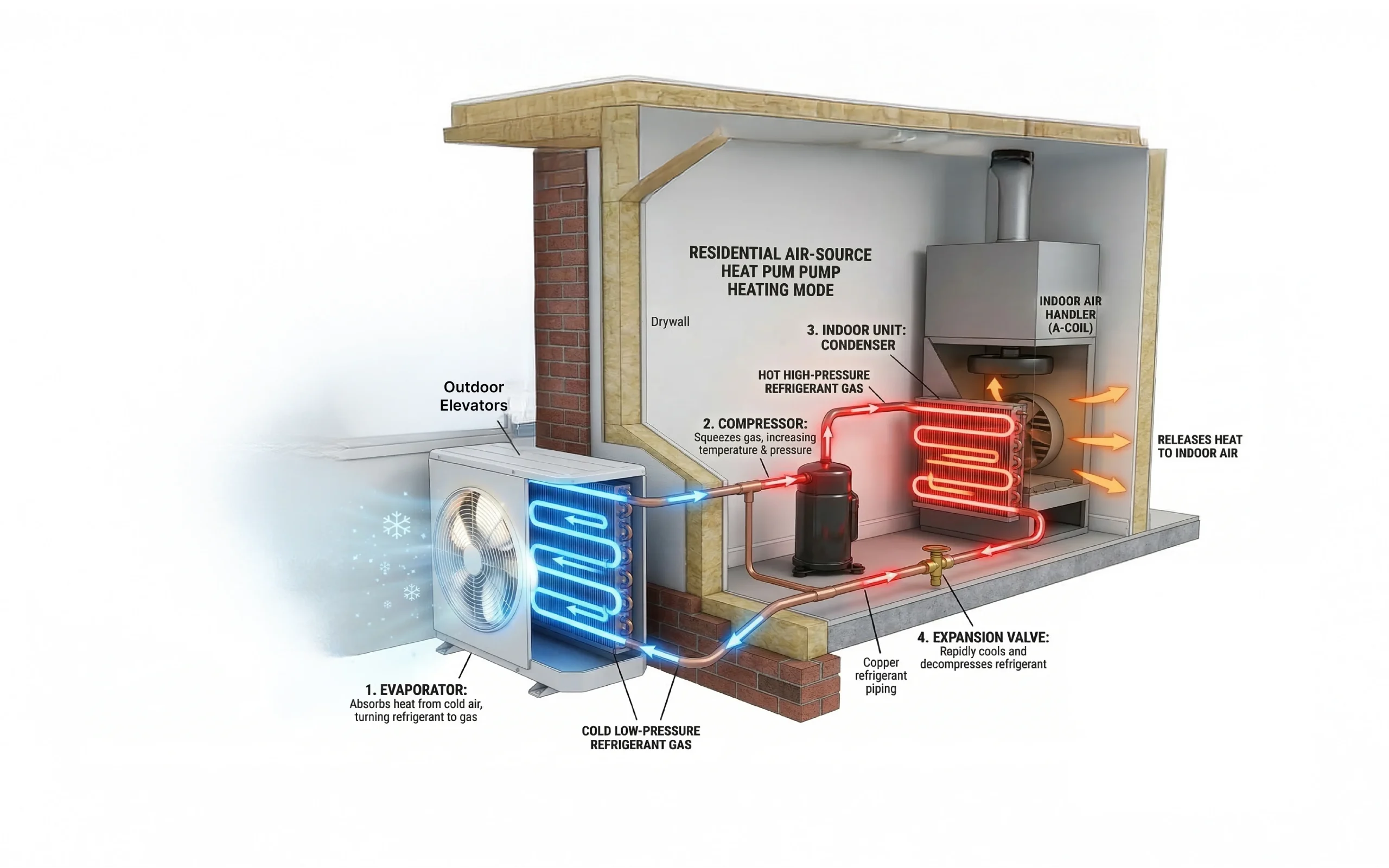
- Evaporator: Even at low temperatures, outdoor air holds thermal energy. Low-pressure liquid refrigerant absorbs it, turning into a gas.
- Compressor: That gas is then squeezed by the compressor; squeezing makes the gas extremely hot.
- Condenser: Hot gas flows indoors, releasing warmth through the vents.
- Expansion Valve: After the gas has cooled down, it changes to a liquid state and is let outside to do it all over again.
A high-efficiency gas furnace delivers a 96% efficiency.
COP = 3.0 means 3 units of heat per 1 unit of electricity
Irrespective of you using a central system or ductless mini-splits, energy is being moved instead of burning fuel.
Heat Pumps in Ontario Winters
One of the biggest myths we hear a lot about is that heat pumps do not work in extremely cold weather. For a fact that was true if it was the 90s, but with the technological advancement and engineering upgrades, the modern systems are more than ready for the frigid temperatures.
The modern heat pump tech uses ultra-modern flash injectors and variable speed inverters to extract heat from freezing air. These latest units retain their heating capacity to 100% to -15°C, on the other hand some can still maintain their heating capacities to maximum even when the temperature slips down to -25°C.
Energy Savings & ROI in Ontario
The ROI for a heat pump in Toronto is higher than ever. Being in Toronto, you could save anywhere between $800-$1200 annually. Homeowners can save even more if the heat pump is used during the non-peak hours when electricity is the cheapest.
People that live in colder areas like Sudbury can save even more by using heat pumps instead of burning expensive fuel. No doubt the initial cost is higher than an air conditioner, but the setup starts paying you back from the day it’s installed.
Ontario Heat Pump: Payback and Savings Table:
| Place | Average Install | Payback w/$7500 Rebate | You save in a year |
|---|---|---|---|
| London | $12,000-$14,000 | 6-8 years | $700-$1,100 |
| Ottawa | $13,000-$16,000 | 4-6 years | $900-$1,300 |
| Toronto | $12,000-$15,000 | 5-7 years | $800-$1,200 |
| Sudbury | $14,000-$18,000 | 5-7 years | $1,000-$1,400 |
2026 Ontario Heat Pump Rebates
When it comes to upgrading your home, timing is of the essence. The heat pump rebates landscape in 2026 is anchored by the Home Renovation Savings (HRS). HRS offers up to $7500 in rebates. Stack with federal Greener Homes incentives for bigger savings. Act now, programs phase out post 2026.
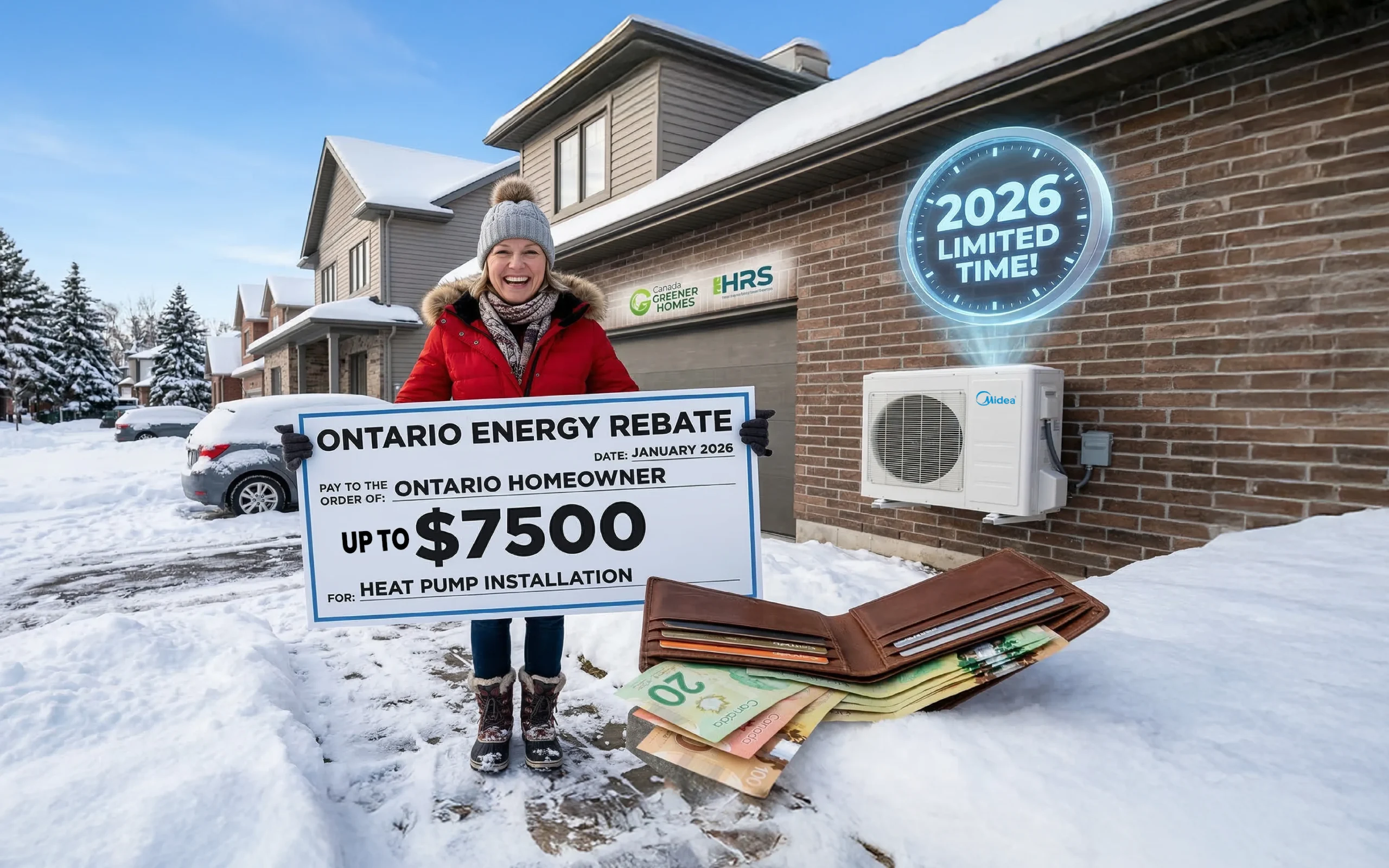
To get qualified for this deal, the heat pump installation should be carried out by professional HVAC technicians. These programs are intended to be a head start for Ontario’s future towards electrification, meaning they are here for a limited time. That means while you wait and watch, you could lose thousands of subsidies while these programs are gradually slipping away.
To qualify for this deal, you must first have the complete installation done by a registered HVAC professional. The Ontario Home Renovation Savings program is intended to support the province’s transition to electricity. These schemes are not permanent and will be phased out. If you delay any further, you could lose thousands of dollars in rebates.
Hybrid Heat Pumps: Best of Both Worlds
Do you want to retain your furnace? A hybrid heat pump also known as dual fuel system heat pump combines an electric heat pump with the existing gas furnace.
A heat pump takes care of the heating around 90% of the year, and when the temperatures drop below a certain threshold, your gas furnace will kick in as a backup heat source.
- take advantage of all the perks associated with heat pumps currently, such as receiving rebates, improving efficiency and retain your furnace if you’d like to keep that as a backup heat source.
Maintenance Tips for Ontario Heat Pumps
Heat pumps that are well maintained commonly reach a lifespan of 15 to 20 years. In order to achieve this, homeowner must do an annual maintenance on their heat pump.
- Keep the drifts clear: Make sure the snow does not obstruct or bar the outdoor units of air flow.
- Snow Stand: Mostly, heat pumps installed in Ontario are mounted on a 18-inch snow stand that lets the drainage water flow easily when the ice melts.
- Check Filters: The indoor filters should be changed every 3 months to sustain the highest efficiency.
Common Objections Debunked
- “Heat pumps make a lot of noise” – Well, not anymore. The latest heat pump models are engineered with cold-climate technology, plus a newly designed inverter technology which keeps the noise low – as for now it is just a soft hum.
- “Heat pump is not that reliable” – The new cold climate heat pumps are designed to be incredibly reliable, built to last in cold weather conditions as we experience in Ontario.
- “Utility bills will see a surprise surge” – When you start using a heat pump, the electricity bill will have a slight increase, however gas, oil, and propane bill goes down, leading to net saving.
Ready for Your Upgrade?
Eventually, an old heating system burns a hole in your wallet. The more you wait, the more hard-earned money keeps slipping out of the vents.
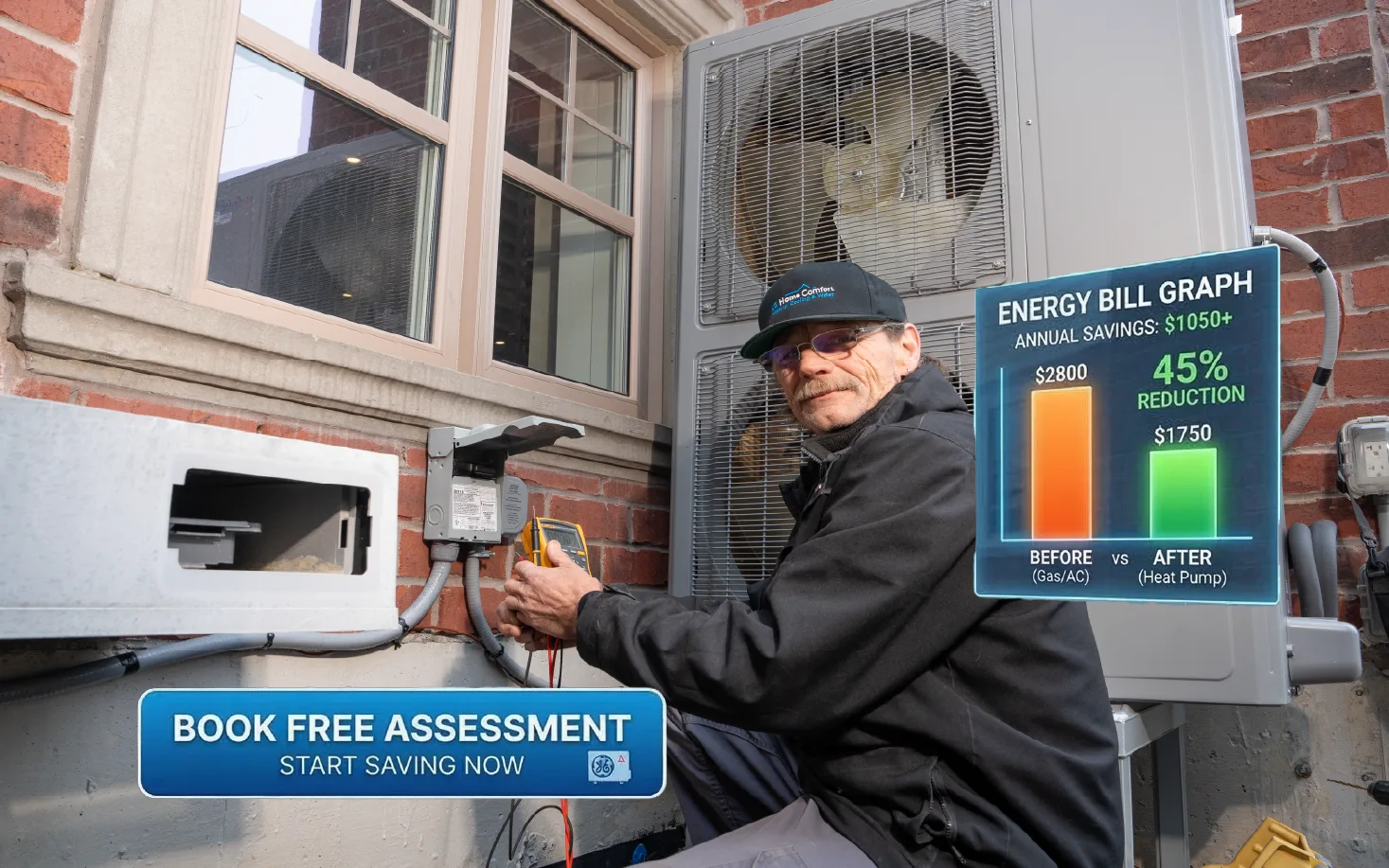
Upgrade now for 40-60% savings +$7500 rebates in 2026 before changes. Book a free assessment.
Heat Pump FAQs for Ontario Homeowners
01 Do heat pumps work in Ontario winters?
Yes. The latest cold-climate heat pumps work perfectly and heat efficiently in extreme cold temperatures. When paired with a Furnace for back of heat it will ensure you and your loved ones are always warmed.
02 Are heat pumps noisy?
No, the latest models operate silently. For comparison, A standard air conditioner is 70 to 80 decibels, whereas most heat pumps are 50 to 60 decibels. You know what I mean? That way you’re actually giving them like a comparable.
03 Can a heat pump replace my central AC?
Yes, A Heat pump will replace your Air Conditioner. It will supply heating in winter and cooling in summer.
04 Will heat pump dehumidify my home?
Yes, Similarly to an air conditioner, when a heat pump is in cooling mode, it will also remove humidity from the home.
05 What happens to heat pump during a power outage?
Heat pumps instantly shut down during a power outage because they solely run on electricity, therefore having a backup generator would be ideal for your home equipment.
06 Is an air-source Heat pump better than a geothermal system?
Air-source heat pumps are relatively affordable to install, although geothermal systems offer higher overall efficiency.

Don't miss our latest guides and updates.
Add LG Home Comfort as a Preferred Source on Google.


Table of Contents
Show More

Related Articles


Search Articles