

 1-866-438-5442


 Heating & Cooling
 Water & Air Quality
 Home Security
 Commercial Solutions
 PROUDLY CANADIAN

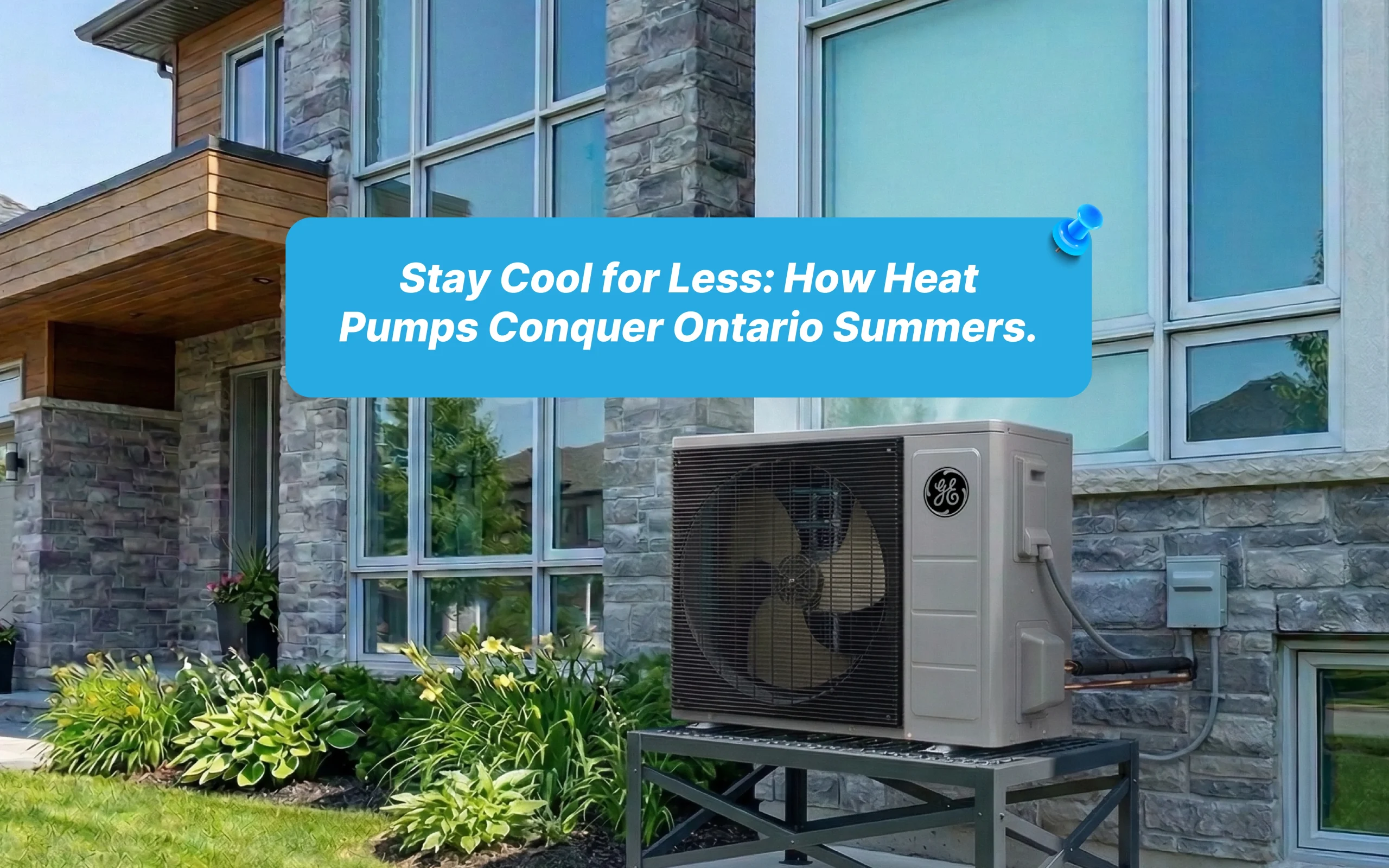

Table of Contents

Heat pumps offer an eco-friendly alternative to traditional air conditioners for hot Canadian summers while providing heating in winter. These all-season systems can drastically lower power bills compared to standard cooling methods.
Modern heat pumps aren’t just for winter; they’re highly efficient air conditioners too. Instead of producing cold air, they move heat out of your home, making them more efficient than traditional ACs. When homeowners in Ontario switch to a heat pump, they get year-round climate control, staying cool in July’s peak heat and warm in September, and all of this while reducing utility bills. [Source: NRcan]
How Does a Heat Pump Work in Summer? The Cooling Process Explained
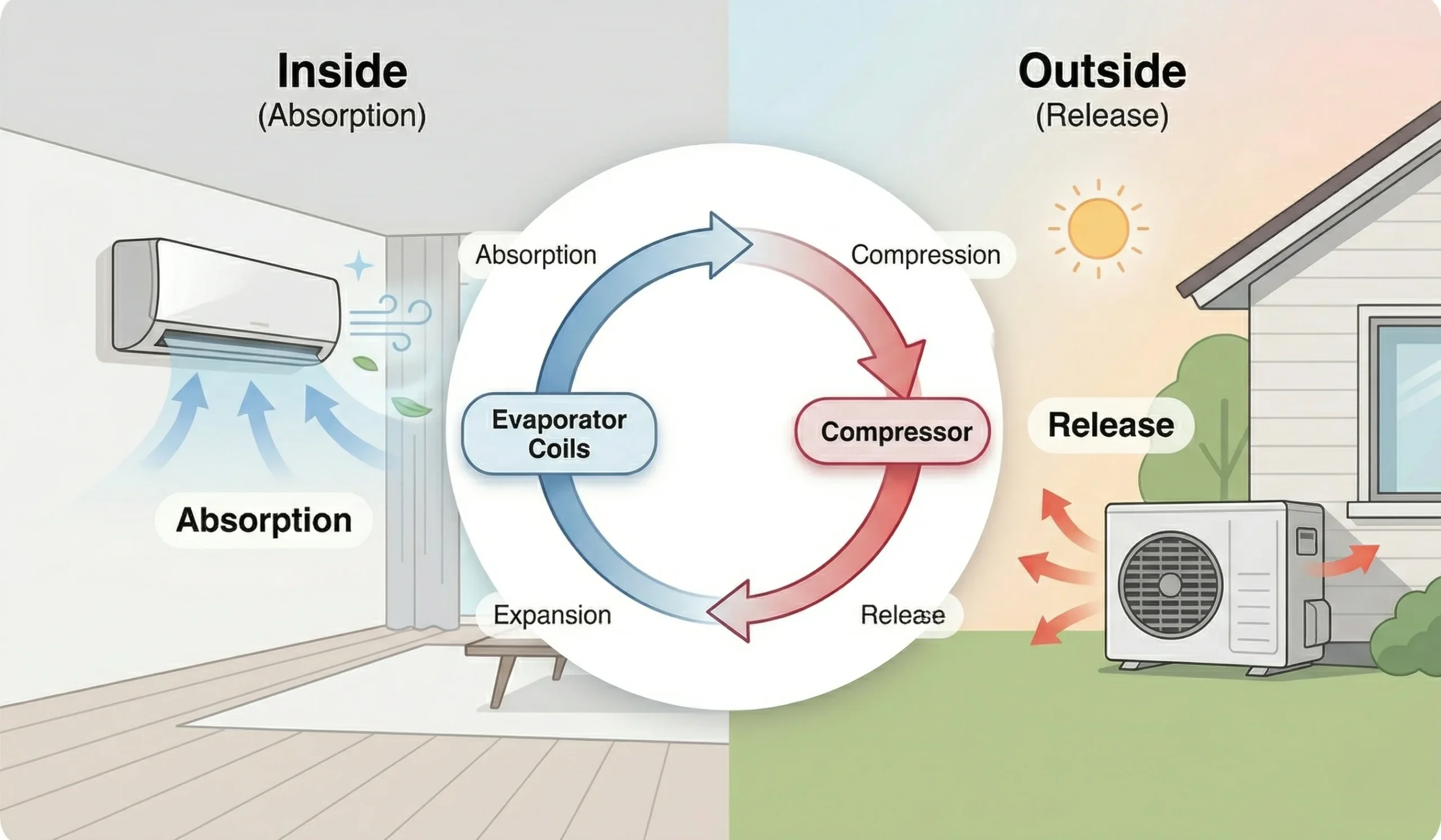
To understand how a heat pump works in summer, forget the idea that it produces cold air. In physics terms, cold is the mere absence of heat, so the system cools your house by moving indoor heat to outdoors.
In summer, a heat pump works like a high-performance air conditioner. The refrigerant acts as the heat-transferring medium, cycling endlessly between indoor (evaporator) and outdoor (condenser) coils.
Heat pumps excel in efficiency as a “heat sponge.” The indoor unit draws warm air over cold coils, trapping thermal energy and passing it to the outdoor unit for release. This loop continues until your home reaches the desired temperature, creating a crisp, dry, comfortable environment.
The Reversing Valve – The Key to Summer Cooling
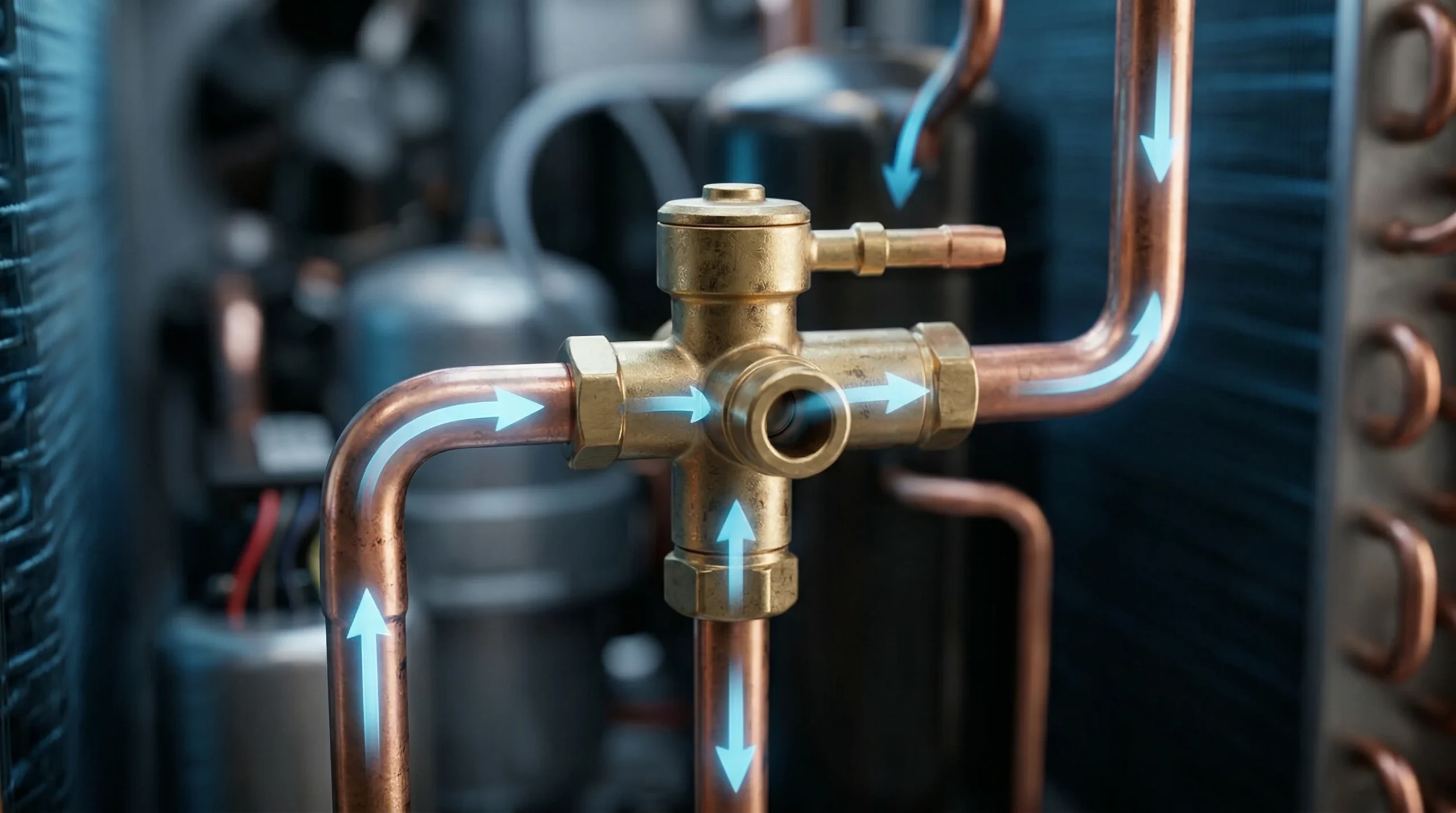
What sets a heat pump apart from a traditional AC is the reversing valve.
ACs move refrigerant one way only, but heat pumps reverse flow via the valve. In cooling mode [summer/June], it directs cold refrigerant indoors. This switch turns a heater into a cooling machine, pushing heat or pulling it in by season.
Step-by-Step: How a Heat Pump Cools Your Home
| Step | Process | Key Action |
|---|---|---|
| 1. Absorption | Indoor unit draws warm air over cold evaporator coils. | Refrigerant soaks up heat. |
| 2. Compression | A compressor raises refrigerant temperatures/pressure. | Concentrates heat for outdoor release. |
| 3. Release | Outdoor fan blows air over hot condenser coils. | Heat dissipates outside, even on hot days. |
| 4. Expansion | Expansion valve lowers pressure. | Refrigerant cools for the new cycle. |
Heat Pump for Cooling vs. Traditional Air Conditioner – Is There a Difference?
Technically, air conditioners and heat pumps function on the same cooling process; however, heat pumps add heating capability, making them the smarter buy.
Traditional ACs cycle on/off, but modern heat pumps use variable-speed (inverter) technology to adjust output between 40-80%, optimizing energy efficiency and humidity control while operating quietly. It’s a 2-in-1 solution vs separate systems.
Best Heat Pump Settings for Summer
Optimal summer heat pump settings balance efficiency and comfort. Unlike furnaces with short bursts, heat pumps perform best at a steady temperature.
What Temperature Should I Set My Heat Pump in Summer?
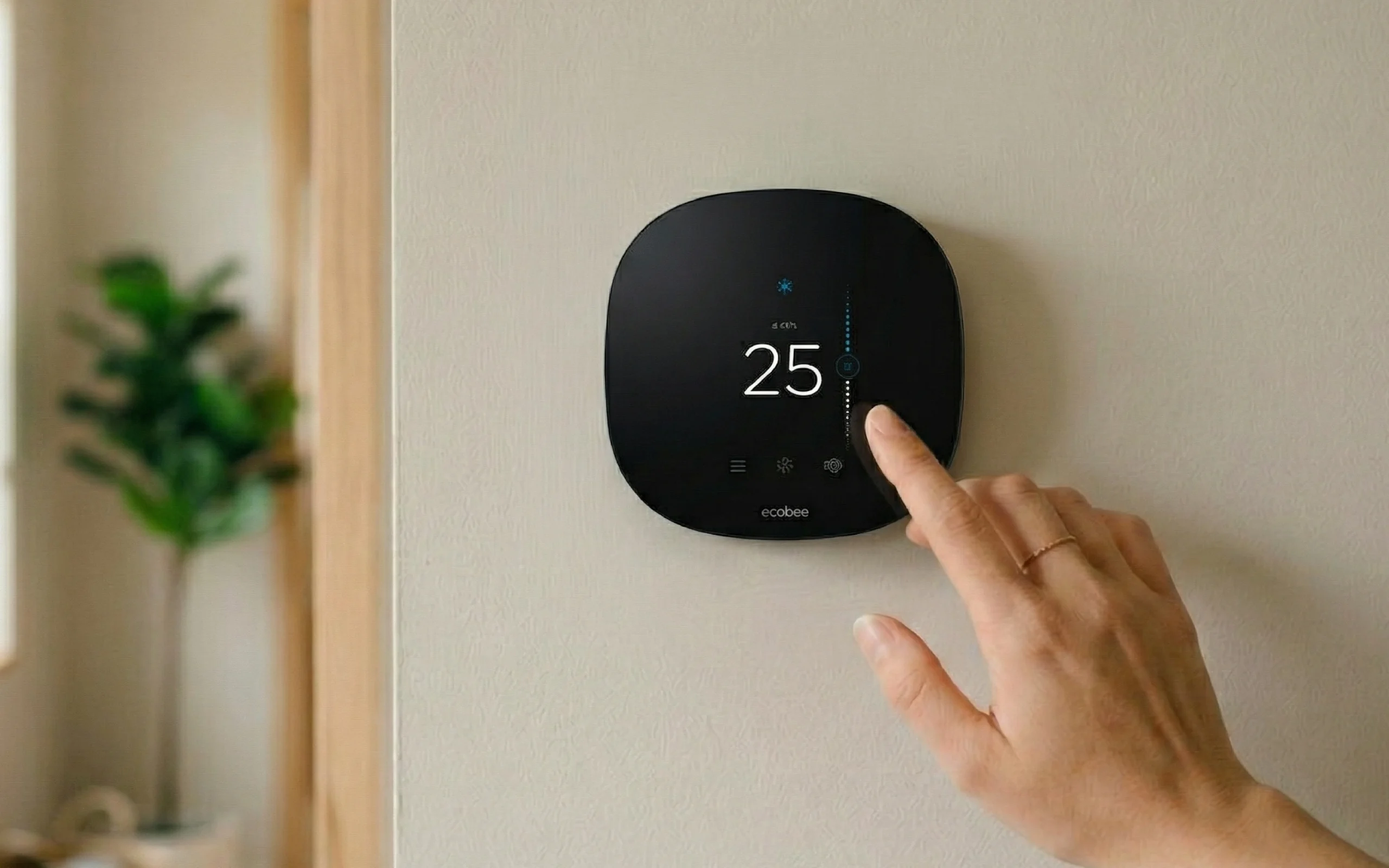
Set your thermostat to 24-26°C (75-78°F) for Ontario savings and comfort. Follow the 4°C Rule: don’t set indoors more than 4°C below outdoors to avoid system strain. NRCan recommends these for peak efficiency and grid relief.
Cooling Mode vs. Auto Mode – Which Setting Is Best?
Ontario’s variable weather poses challenges for Auto mode. The system may heat during cool mornings or cool excessively when conditions change.
Thermostat Tips to Maximize Heat Pump Efficiency
- Keep it steady: Raise the temperature by 2-3°C when you’re away. This reduces energy consumption while preventing the system from working harder when you return
- Use standby: Use standby mode: Increase the temperature by 1°C at night to save energy while maintaining comfort. Most occupants won’t notice this small change.
Benefits of Using a Heat Pump for Cooling in Summer
- Energy Efficient: Heat pumps deliver up to 300% efficiency by moving heat rather than generating it.
- Built-in dehumidifier: Built-in dehumidifier: Extended low-speed operation cycles remove moisture efficiently, providing superior humidity control during humid Ontario summers
- Works silently: World class ductless mini split heat pumps work so silently that you would not notice whether it’s on or off (less than 20 dB)
- Eco-friendly heating: Eco-friendly operation: Unlike gas-powered systems, heat pumps run on electricity-which becomes increasingly clean as Ontario transitions to renewable energy sources. This significantly reduces your home’s carbon footprint
How to Get the Most Out of Your Heat Pump This Summer
- Expert Maintenance: Professional maintenance: Schedule annual professional inspections to keep your heat pump running efficiently for 15+ years. Early detection prevents minor issues from becoming costly problems
- Keeping the outdoor unit clear: Make sure there is 2 feet clearance around the outdoor unit. The overgrown weeds, dry leaves, etc. could choke up the system and airflow.
- Filter Clean-up: Keep checking the filters if it needs to be washed or if it does not help, simply swap it. Dirty filters make the compressor work hard, which increases your electricity bills.
Common Problems With Heat Pumps in Summer (Troubleshooting)
On but Not Cooling
- Checking thermostat mode: Verify the system is set to ‘Cooling’ or ‘Cool,’ not ‘Heat’ or ‘Fan Only.
- Dusty coil: Outdoor coils covered with dust or plant matter cannot release heat effectively, reducing cooling capacity
Blowing Warm Air
- Malfunctioning of reverse valve: A stuck reversing valve remains in heating mode, preventing the system from cooling. Professional repair is required.
- Refrigerant levels at low: Heat sponge cannot work if there is leak, hence releasing lukewarm air.
Ice Build-up
- Frost/ice buildup: Ice on indoor or outdoor coils indicates restricted airflow or a refrigerant leak. Check filters immediately and contact a professional if the problem persists. Check your filters immediately. In such a situation, it is recommended that you have your filters changed right away. And if the problem still persists, shut down the system and contact professional service, as this usually shows there is a refrigerant leak.
Types of Heat Pumps That Work Best for Summer Cooling
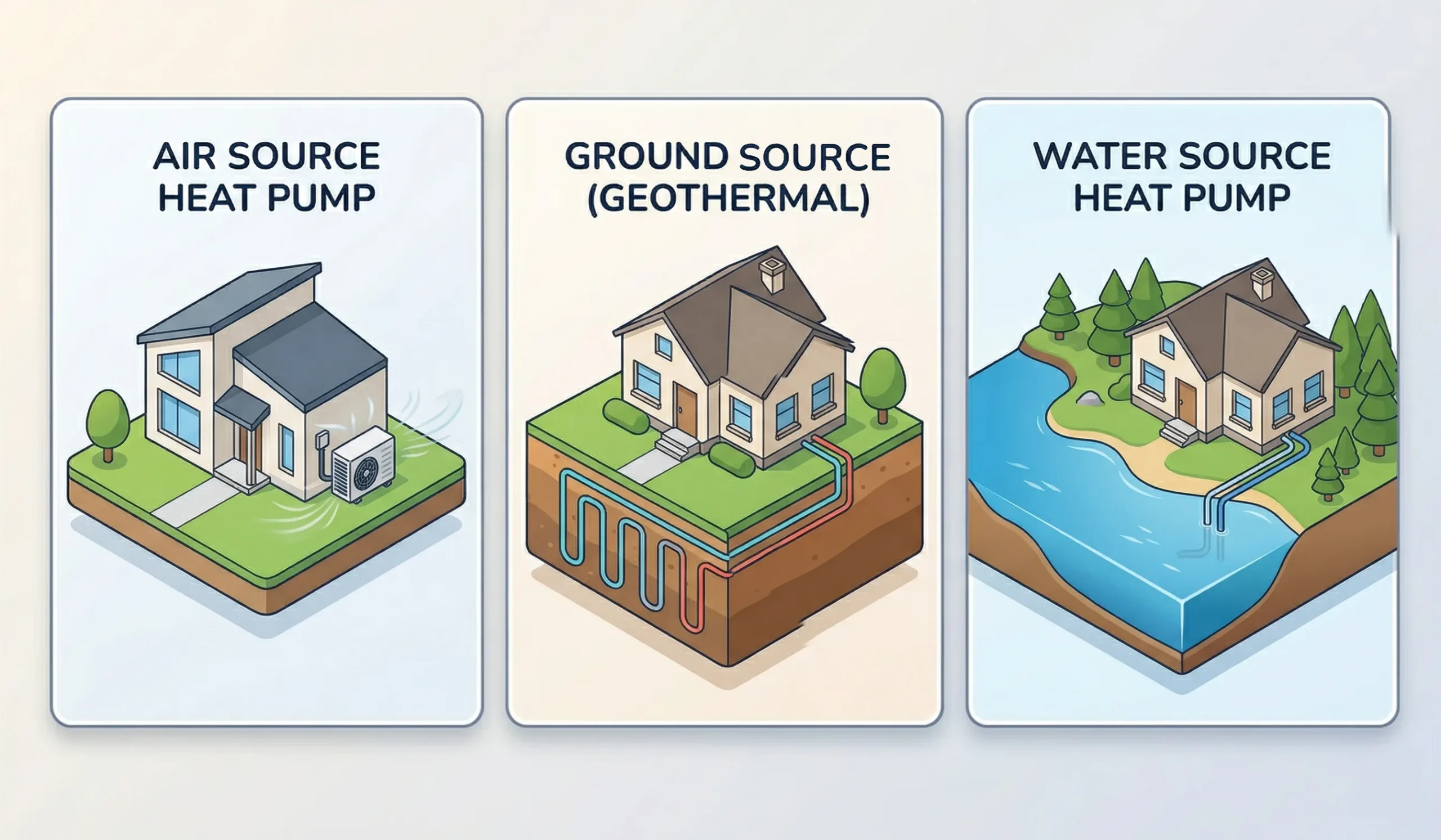
Air Source Heat Pumps
Air source heat pumps are the ones you would most see in Ontario. The reason for its being so commonly used is that it is easy to install and offers great efficiency for most types of residential spaces. Air source heat pump comes in 2 versions: one is a ducted or central air source heat pump, and the other is a ductless mini split heat pump.
Ground Source (Geothermal) Heat Pumps
Ground Source Heat Pumps function on the base of pipes under the ground to exchange heat with earth. As the constant temperature of ground is 10°C, hence known to be the most effective cooling system there is, the only thing about these types of heat pumps is that they come with very high installation cost or upfront investment.
Water Source Heat Pumps
Water source heat pumps are ideal for homes near lakes or waterfront areas. They extract heat from nearby water bodies, which provide excellent heat exchange efficiency and nearly silent operation.
Conclusion – Stay Cool and Efficient With Your Heat Pump This Summer
Wondering how a heat pump could work in the blistering summer season? Understanding it is straightforward: The heat pump’s reversing valve cycles heat out of your room to the outdoors, maintaining comfort. The heat pump is a robust system and a fantastic choice when you want to reduce your electricity bills, great for controlling humidity comfortable indoor stays, and lastly helps in reducing carbon footprint.
Can your home stand the sizzling Ontario heat?
We at LG Home Comfort, are here to assist you to keep your home pleasantly cool for less. It doesn’t matter if you want a quick tune-up or are looking for a new efficient system, our team has got your back.
Contact LG Home Comfort right away to book your slot for a summer service that helps you keep your indoors comfortable throughout the season.
Frequently Asked Questions (FAQs) – Heat Pumps in Summer
01 Do heat pumps work in 100-degree (38°C) weather?
Yes, the latest heat pumps are designed to deliver reliable cooling despite the temperatures soaring to 100°F (38°C). Although heat pump efficiency may decrease slightly as outdoor temperatures rise, high-performance units continue cooling effectively even in extreme heat. When the temperature is extremely high, make sure the outdoor unit has appropriate airflow along with shaded surroundings that help in releasing heat easily.
02 How long should a heat pump run in the summer?
Traditional ACs frequently turn on and off; a heat pump, however, comes with an inverter technology that prevents it from short cycling and can run for extended periods at a low and stable pace. It is not only normal but efficient for a system to keep running throughout the heatwave. This continuous operation sets up for better dehumidification and skips the swing in temperatures that are usually present in older systems.
03 Do heat pumps use a lot of electricity?
So, are heat pumps efficient? Yes, compared to electric heaters, they consume much less electricity. This is due to the heat pumps moving heat instead of generating it, hence they can achieve an unbelievable efficiency of 300% vs electric heaters. Still, if you sense there is a surge in the utility bill of your home, then it might be due to leaky and poor insulation that makes the system work harder, causing the high electricity bill.
04 What does a heat pump do in summer if the AC is off?
A heat pump sits idle when the cooling mode is turned off. Nevertheless, most homeowners keep the heater in “Fan Only” mode for most summer evenings. In this mode, an indoor unit moves and filters the air via high-efficiency specialized mesh filters without ever needing the outdoor compressor, offering a pleasant breeze and enhanced air quality without active cooling.
05 At what point do heat pumps become ineffective
For cooling purposes, heat pumps are less effective when the temperature outdoors crosses their highest limit, which is usually above 46°C, and this is extremely rare to see in Ontario. During winters, a standard heat pump may lose its efficiency when the temperature is down to -15°C; the Cold Climate Heat Pump can withstand harsh weather like -30°C.
06 Why is my bill so high with a heat pump?
High energy bills typically result from running the system at maximum output, which forces it into less-efficient high-speed operation. Causes include running mode set to maximum, clogged filters, refrigerant leaks, or a stuck reversing valve.

Don't miss our latest guides and updates.
Add LG Home Comfort as a Preferred Source on Google.


Table of Contents
Show More

Related Articles


Search Articles