


Using Your Heat Pump in the Summer
| Using your heat pump in the summer cools your home by pulling heat and humidity out. To keep it running efficiently, avoid sudden thermostat changes, let the fan run on auto, and ensure airflow around your outdoor unit stays clear. |
Did you know that heat pumps are one of the most efficient HVAC systems for year-round indoor climate control? They transfer heat from one place to another. When you switch to cooling mode, they keep you feeling cool and fresh by pulling warm, humid air out of your space.
Considering the recent heat warnings in Ontario, it’s more crucial than ever to optimize your heat pump settings for summer. Even minor misconfigurations can make your space muggy. Here’s how to maintain comfortable air quality all season without driving up your energy costs.
| Using Your Heat Pump in the Summer | |||
How Does Heat Work in Summer
At a basic level, a heat pump operates through heat transfer. Unlike conventional air conditioners or cooling systems, it doesn’t just blow cool air into your space.
Its refrigerant coil extracts heat and moisture from your indoor air, then the outdoor unit compresses and transfers them to the outside air. It’s a closed-loop process that works in both ducted and ductless systems.
How Does a Heat Pump System Switch Between Heating and Cooling Mode?
Heat pumps switch refrigerant flow by activating the reversing valve. There’s no need to press a button on the unit itself. It’ll automatically switch between warm and cool air based on the temperature set on your thermostat.
In cooling mode, the indoor coil functions as the evaporator, while the outdoor coil releases heat. Alternatively, heating mode reverses the refrigerant flow. The outdoor coil becomes the evaporator, while the indoor coil acts as the condenser. This internal switch is managed entirely by two central components: the system logic and the reversing valve.
Learn more: How Heat Pumps Work
How To Use Your Heat Pump Efficiently During Summer
You can maintain comfortable indoor air quality and stay energy efficient by managing how your heat pump runs.
Understand Your Runtime
The typical runtime depends on what type of heat pump you have. Variable-capacity systems use an inverter-driven or variable-speed compressor to adjust their output to match the preferred temperature. They run longer at lower speeds to match cooling demand.
Meanwhile, non-inverter (single-stage) heat pumps and traditional air conditioners are designed to operate in shorter on/off cycles. They run at full power and then shut off after hitting the target temperature. Once you know your system’s ideal runtime, adjust your use accordingly.
Control Indoor Humidity with Steady Cooling
During summer, a heat pump’s indoor coil also acts as a dehumidifier. But this only works effectively during longer cooling cycles, when moist, warm air spends enough time passing over the coil. If the system short-cycles too often, indoor humidity can stay high even if the room feels cool.
To improve dehumidification, avoid adjusting your thermostat up and down throughout the day. Instead, follow a consistent setpoint.
Position Outdoor Units for Better Heat Rejection
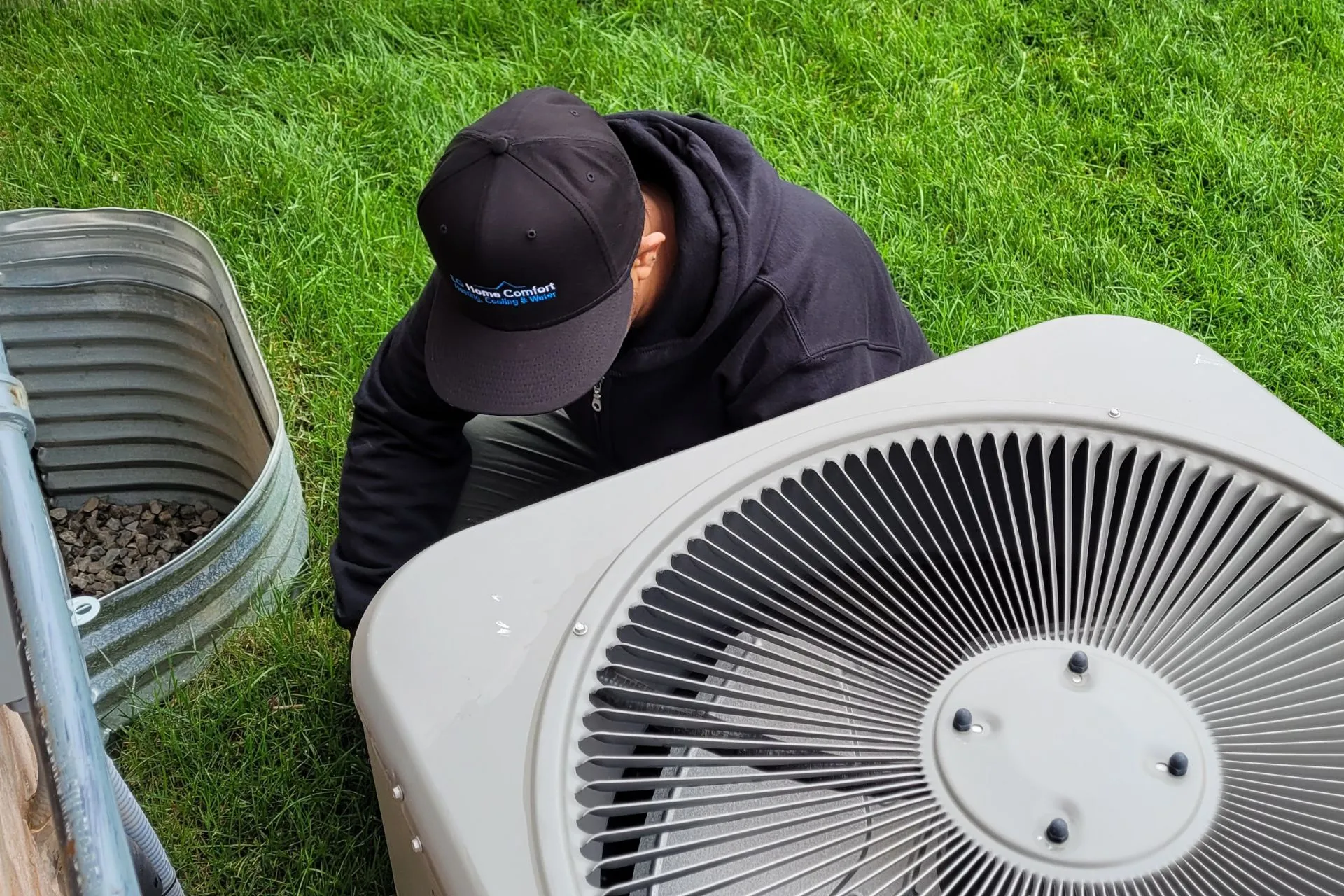
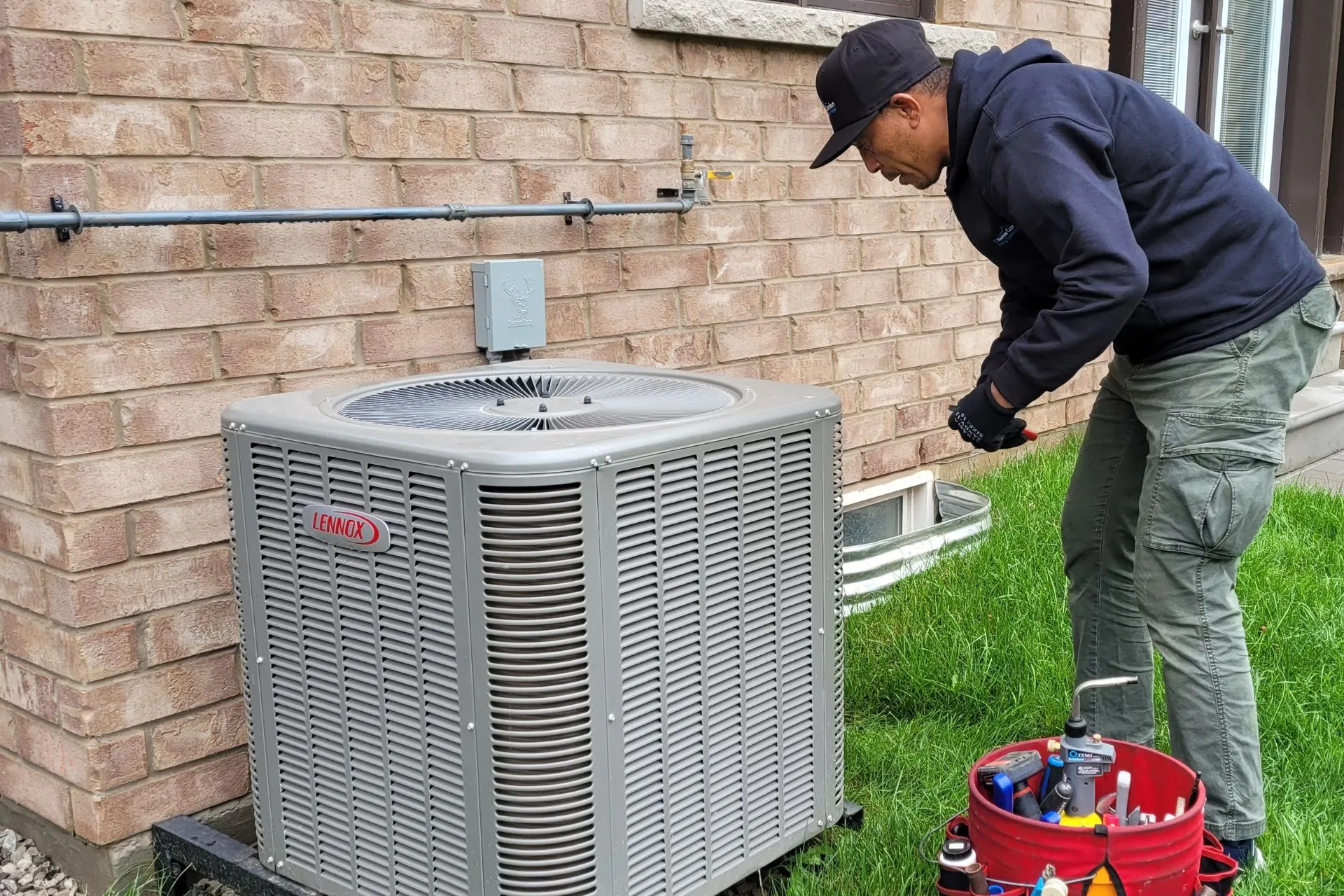
Your outdoor unit expels heat during cooling mode, and its efficiency depends on unrestricted airflow. Walls, fences, plants, or stacked objects can block airflow. And when heat builds up around the coil, the system increases its energy use to maintain peak performance.
Make sure your outdoor unit has ample space on all sides. Avoid surrounding it with plants, furniture, or storage bins that could block airflow.
Professionally installed systems are positioned with clearances based on manufacturer specs (often 30 to 60 centimetres on all sides). However, airflow can still be disrupted over time by overgrown shrubs or backyard clutter. Keeping the area open helps the system release heat efficiently, especially in tight spaces like patios or alleys.
Use Auto Fan Mode to Reduce Unnecessary Load
Leaving the fan set to “on” can unintentionally push warm air back into your living space. When the compressor shuts off, residual heat from the indoor coil and ductwork may linger. The stagnant air might make your space feel warmer and potentially trigger more compressor cycles.
To prevent this, sync fan activity with the cooling cycle. Air only moves when the system is actively lowering the temperature, keeping airflow sharp and purposeful.
Avoid Adjusting the Thermostat at Night
It’s normal to feel warmer at night as stored heat from walls, floors, or attics radiates back into the living space. Called thermal lag, this delayed release of heat can make you think the room is warming up and prompt you to adjust the thermostat at night. However, that often backfires by triggering longer, high-output compressor cycles just as outdoor temperatures begin to cool.
For inverter-based systems, sudden temperature drops can disrupt low-speed operation and force an output surge. Short bursts of cooling will cause temperature swings and overcorrect. The best approach is to let the system manage the remaining heat load gradually.
Best Heat Pump Settings for Ontario Summers
Calibrate your thermostat for optimal performance and energy savings based on outdoor temperatures. Here’s how to get the best temperature for a heat pump in summer.
| Scenario | Setting | Technical Reason |
| Occupied (daytime) | 22 to 24 °C | Balances cooling load and humidity control while supporting longer compressor cycles |
| Occupied (nighttime) | Same as daytime, or lower by 0.5 to 1 °C | Allows steady cooling overnight and prevents compressor ramp-ups |
| Unoccupied (short-term) | Raise by 3 to 5 °C from active setpoint | Reduces system load while keeping humidity in check |
| Unoccupied (long-term) | Set to 28 °C or use vacation mode | Maintains airflow and prevents excess humidity buildup (don’t turn off the system) |
| Typical everyday user preference (based on online forums) | 20.5 to 21 °C | Common in older homes or poorly insulated spaces |
| Smart thermostat | Dynamic schedule with 0.5 to 1 °C shifts | Enables gradual setpoint adjustments and adaptive cooling during heatwaves |
Tips To Prevent Common Summer Heat Pump Issues
Keep your HVAC system running properly throughout the hot and humid months with these helpful tips.
Monitor Airflow Consistency at Vents
Don’t rush to tweak the thermostat if certain parts of your indoor space feel warmer (or colder) than others. Inconsistent airflow could reveal issues inside the ductwork, like a partially blocked return vent.
However, it could also point to an early warning sign of pressure imbalance. If the issue persists, have a licensed HVAC technician inspect your system to pinpoint the cause and prevent long-term damage.
Pay Attention to Line Set Temperature
Check the insulated copper line running from your outdoor unit. When your system is in cooling mode, it should generally feel cold, like a chilled can of soda. If it’s warm or room temperature, that could indicate:
- Low refrigerant charge
- Restriction in the expansion valve
- A compressor not running correctly
- Reversing valve not switching properly
Listen for Reversing Valve Noise at Startup
The reversing valve makes a few noises when starting up. You’ll usually hear a soft click when the solenoid engages, a whooshing sound as the internal pressure shifts, and a slight pause in compressor noise. They usually last a few seconds.
However, note anything loud and repetitive. Rapid toggling between modes, persistent clicking, and a loud metallic clank typically suggest underlying damage. In these cases, call for an inspection.
Check for Water Draining Near the Indoor Unit
The indoor coil removes moisture from the air and drains it into a shallow pan underneath. Collected water flows out through a dedicated condensate drain line. It might be backed up if you see water pooling around the air handler or notice damp spots on the floor below the unit. In that case, ask your HVAC technicians to check for algae, dust, or mould.
FAQs About Heat Pump Settings for Summer
Consider setting your heat pump system to 24°C to 26°C during the summer. It balances comfort and cooling efficiency during Ontario’s summer cooling season.
If you have a programmable thermostat, raise the temperature slightly when you’re away (around 28°C) to reduce energy consumption. Just make sure not to overcorrect afterward. Setting it too low (e.g., below 21°C) can lead to overcooling, higher bills, and even system strain.
It usually means that the system is stuck in defrost mode, the reversing valve is malfunctioning, or your thermostat settings are incorrect. There’s a brief, efficient heating cycle to prevent the evaporator coil from freezing.
Check if your thermostat is set to “cool” and inspect for tripped breakers. If the issue persists, ask a licensed technician to inspect the reversing valve, refrigerant levels, or air filter.
It’s normal for ice to build up on your heat pump in the colder weather. But in the summer, it usually means there’s an underlying issue.
Prevent freeze-ups by keeping its filters clean, vents unblocked, and coils free of dust or debris. Also, setting the thermostat too low (under 21°C) can usually trigger freeze-ups. If your unit is always freezing, however, hire a professional to check for underlying refrigerant issues and airflow imbalances.
Cool mode is usually the better choice for a cool, steady temperature. It tells your heat pump to run only when indoor temperatures rise above your set point. Since auto mode switches between heating and cooling, it can sometimes lead to unwanted heat cycles and inconsistent comfort.
In Summary
- Heat pumps don’t generate cool air. They transfer heat outside.
- Set your thermostat between 22°C and 24°C during the day and avoid overcorrecting at night. Sudden changes interrupt inverter operation and create cooling inefficiencies.
- Leave the fan mode on auto, not “on.” Otherwise, residual heat in the ducts may recirculate and trigger extra cooling cycles.
- Long, steady runtimes allow coils to pull more moisture from the air. Frequent on/off cycles reduce dehumidification and raise indoor humidity.
- Outdoor units need unobstructed airflow to reject heat properly. Blocked coils lead to spikes in energy bills and system strain.
- Line set checks are simple but revealing: during cooling, the insulated copper pipe should feel cold, not warm or neutral.
- Reversing valve noise is normal at startup, but persistent clicking or loud bangs signal mechanical or electrical issues.
- Pooling water near the indoor unit means your condensate line might be clogged, triggering the float switch shutdown and disabling cooling.
Prepare Your Heat Pump for the Summer With LG Home Comfort!
Whether you’re optimizing your heat pump settings for summer, scheduling routine maintenance, or considering a new heat pump installation, our team is ready to help. LG Home Comfort offers same-day appointments in Southern Ontario. We have licensed, fully equipped HVAC technicians on standby 24/7. Get in touch with us for a sample quote and estimate.



 1-866-438-5442
Terms and Conditions
- Once an initial service has been completed, the customer will be on a one-year commitment
- After the initial 12 months, the contract will be renewed on a month-to-month cadence
- If a service is completed for the next year, it automatically renews the commitment for an additional year
- Customers can cancel at any time after the 12-month initial commitment as long as the following year’s service has not been completed.
- Customers need to provide 30 days written notice in order to cancel their plan